Vehicle Modifications
Why Every Car Owner Needs an OBD2 Scanner: Your First Essential Tool

Picture this: You're driving along, minding your own business, when suddenly your dashboard lights up like a Christmas tree. The dreaded "Check Engine" light glares at you, and your stomach drops as you imagine dollar signs floating away. Sound familiar? Most car owners don’t realize that cryptic warning light is actually your car trying to communicate with you. With the right tool, you can finally understand what it's saying.
Enter the OBD2 scanner, the unsung hero of modern car diagnostics that should be sitting in every glove compartment. Think of it as Google Translate for your vehicle—it turns those mysterious dashboard alerts into plain English explanations you can act on. Whether you're a weekend warrior heading out for adventure or just someone who wants to avoid getting blindsided by repair bills, an OBD2 scanner is about to become your new best friend.
The beauty of modern car diagnostics isn't just in the technology—it's in the empowerment. Instead of driving to the mechanic in a panic every time a light appears, you'll know exactly what's happening under the hood before you even pick up the phone. Ready to take control of your vehicle maintenance game?
What Exactly Is an OBD2 Scanner and Why Should You Care?
Let's start with the basics. OBD2 stands for On-Board Diagnostics II, and it's essentially your car's built-in health monitoring system. Since 1996, virtually every vehicle sold in the United States has come equipped with this standardized system that continuously monitors your engine, emissions, and other critical components.
Here's where it gets interesting: your car is constantly running self-diagnostics, like a hypochondriac with a medical degree. When something goes wrong, it doesn't just turn on a vague warning light—it generates specific diagnostic trouble codes (DTCs) that pinpoint exactly what's happening. The problem? These codes are stored in your car's computer in a language that might as well be ancient hieroglyphics to most of us.
That's where an OBD2 scanner comes in. This little device plugs into a 16-pin connector (usually located near your steering wheel) and translates those cryptic codes into information you can understand and act on. Think of it as having a direct conversation with your car's brain.
The system monitors everything from fuel efficiency and engine performance to emissions compliance. When California's Air Resources Board developed this technology, they envisioned a world where car owners could take charge of their vehicle's health. And here we are, decades later, with that power literally at our fingertips.
What makes this particularly exciting is the democratization of car knowledge. You no longer need years of automotive training to understand what's wrong with your vehicle. A $30 scanner can give you the same diagnostic information that used to require expensive shop equipment.
The Money-Saving Magic: How an OBD2 Scanner Pays for Itself
Let's talk numbers, because this is where OBD2 scanners really shine. The average diagnostic fee at a repair shop ranges from $100 to $150—just to tell you what's wrong, not to fix it. Now imagine paying that fee every time you want to check a dashboard light or verify a repair was done correctly.
Here's a real-world scenario that happens more often than you'd think: your check engine light comes on, you panic and drive to the nearest shop, only to discover it's a loose gas cap or a minor sensor issue that costs $20 to fix. But you've already paid $120 for the diagnostic, plus whatever markup the shop adds to parts and labor.
With an OBD2 scanner in your toolkit, you become the first line of defense. You can immediately check what's triggering that warning light and make informed decisions about whether it's a "drive to the shop immediately" situation or a "pick up a part on Saturday" kind of fix.
The diagnostic accuracy of modern OBD2 systems is impressive—over 80% according to industry data. This means you're getting reliable information that can help you avoid unnecessary trips to the mechanic and prevent small issues from becoming expensive problems.
Consider this: many common issues like oxygen sensor failures, mass airflow sensor problems, or even something as simple as a loose battery connection can be identified instantly. You'll know whether you're dealing with a $50 fix or a $500 repair before you commit to anything.
Beyond immediate savings, there's the long-term benefit of proactive maintenance. By monitoring your vehicle's health regularly, you can catch issues in their early stages when they're cheaper and easier to address.
Decoding the Dashboard: Understanding What Your Car Is Really Telling You
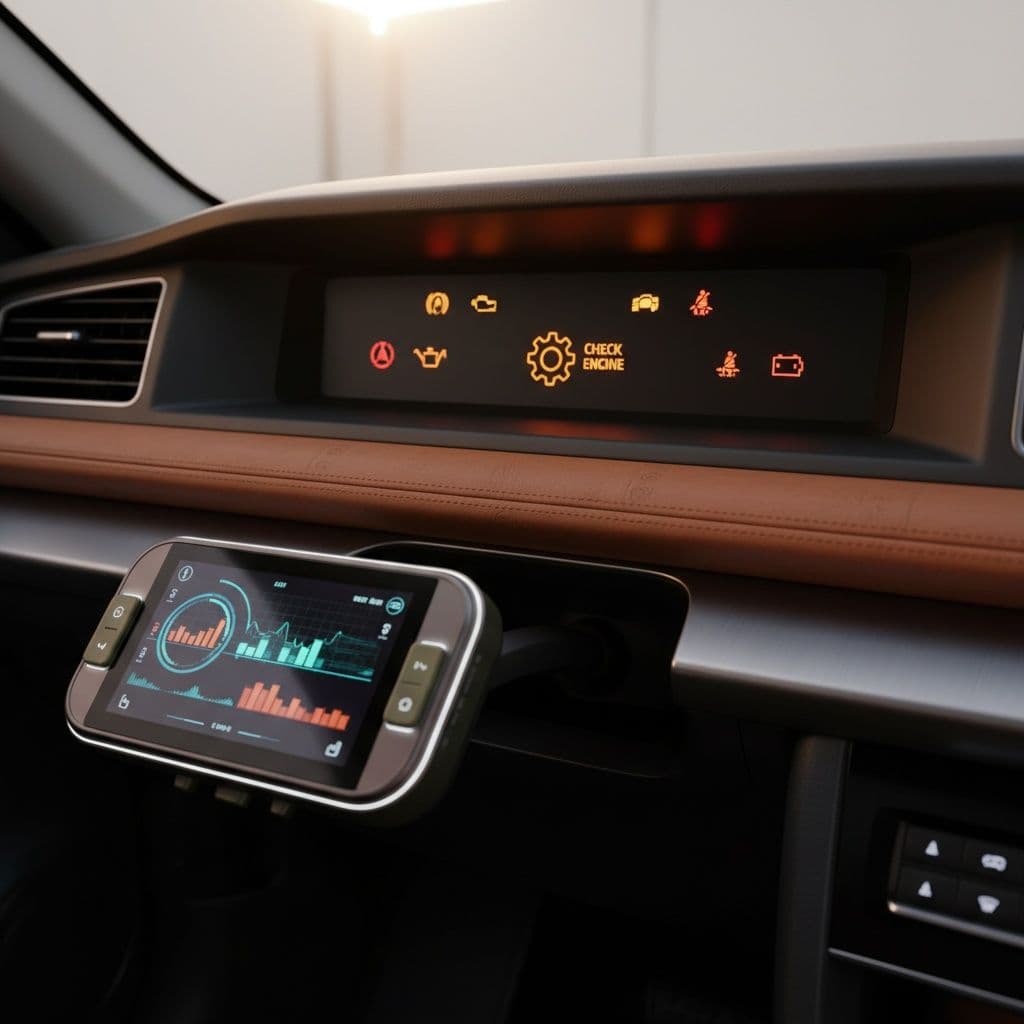
Your dashboard is like your car's social media feed—it's constantly sharing updates about what's happening internally. But unlike scrolling through posts, these updates actually matter for your safety and wallet. Modern car diagnostics through OBD2 systems give you unprecedented insight into these communications.
When that check engine light appears, it's not just a vague cry for help. Your car has identified a specific problem, assigned it a precise code, and stored detailed information about when and how the issue occurred. An OBD2 scanner retrieves this information and often provides freeze frame data—a snapshot of exactly what your engine was doing when the problem occurred.
This level of detail is game-changing. Instead of guessing whether that rough idle is related to fuel, ignition, or air intake, you get specific guidance. The scanner might tell you it's detecting a misfire in cylinder 3, or that your oxygen sensor is reading lean, or that there's an issue with your evaporative emission system.
What's particularly helpful is that many modern scanners don't just give you codes—they provide plain English explanations and even suggest potential causes. Some devices link directly to online databases where you can research your specific issue and see what other owners of your vehicle model have experienced.
The real magic happens when you start using your scanner proactively. Instead of waiting for warning lights, you can perform regular health checks on your vehicle. Many issues begin as "pending" codes before they trigger dashboard lights. Catching these early gives you time to research, shop for parts, and plan repairs on your schedule rather than being forced into emergency situations.
For those with specific vehicle needs, like Land Rover owners dealing with complex systems, specialized tools become essential. If you own a Land Rover, a generic OBD dongle won't cut it. Air suspension, EPB, and JLR-specific modules need the right tool. After testing and owner feedback, check out the Best OBD Scanners for Land Rover Discovery 4 (LR4) to navigate the unique diagnostic requirements of these sophisticated vehicles.
Beyond Basic Codes: The Hidden Powers of OBD2 Technology
While reading diagnostic trouble codes is the headline feature, OBD2 scanners offer capabilities that can transform how you interact with your vehicle. These devices tap into real-time data streams that reveal what's happening inside your engine at any given moment.
Key Features of OBD2 Scanners:
- Live Data Monitoring: Watch parameters like engine RPM, coolant temperature, fuel trim, and oxygen sensor readings in real-time.
- Freeze Frame Data: Capture a snapshot of all engine parameters when a problem is detected.
- Bidirectional Control: Command components to activate, reset adaptation values, and perform emissions readiness checks.
- Code Clearing and Monitor Resetting: Clear codes and reset monitors after repairs, ensuring everything is back to normal.
This level of control was once reserved for professional diagnostic equipment. The freeze frame feature deserves special attention. When your car detects a problem, it doesn't just record the error—it takes a complete snapshot of all engine parameters at that exact moment. This data can be invaluable for diagnosing complex issues and understanding the conditions that led to the problem.
For adventure seekers and those who push their vehicles in challenging conditions, this real-time monitoring becomes even more valuable. You can keep an eye on engine temperature during mountain climbs, monitor fuel system performance on long road trips, and ensure everything is operating within normal parameters when you're far from civilization.
Choosing Your Diagnostic Sidekick: Types of OBD2 Scanners
The OBD2 scanner market offers options ranging from basic code readers to professional-grade diagnostic tools. Understanding the differences helps you choose the right tool for your needs and budget.
Types of OBD2 Scanners:
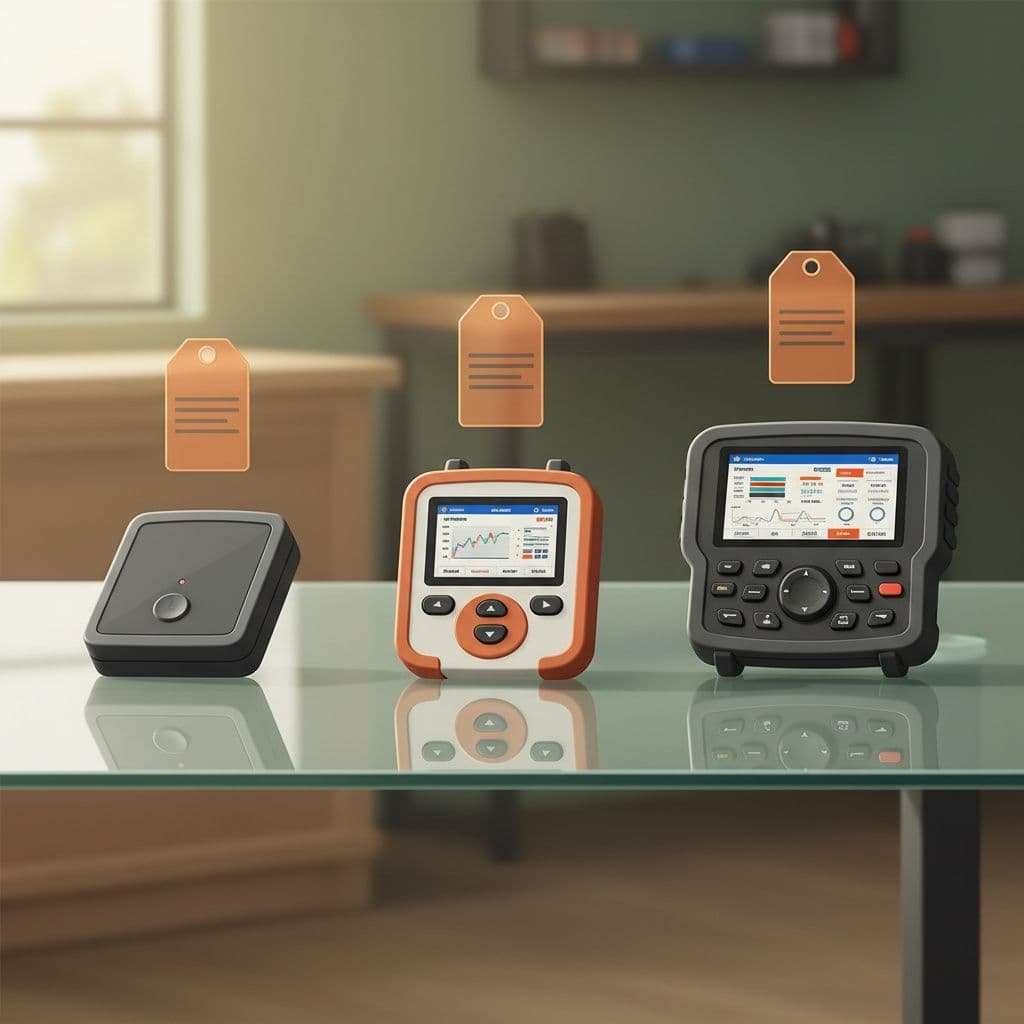
- Basic Code Readers ($20-50): Entry-level option that reads and clears diagnostic trouble codes, perfect for occasional use.
- Mid-Range Scanners ($50-150): Add live data streaming, freeze frame data, and user-friendly interfaces for a balance of functionality and affordability.
- Bluetooth and WiFi Dongles: Connect to smartphone apps for convenience, offering cloud-based code databases and repair suggestions.
- Professional-Grade Scanners ($200+): Comprehensive diagnostic capabilities, including bidirectional controls and manufacturer-specific functions.
Consider your specific vehicle when choosing. Some manufacturers have unique systems that require specialized tools. European vehicles, luxury cars, and trucks often need more advanced scanners to access all available diagnostic information.
The key is matching the tool to your comfort level and intended use. A basic scanner might be perfect if you just want to understand dashboard lights, while someone who enjoys DIY repairs might benefit from investing in a more capable device.
Real-World Scenarios: When Your OBD2 Scanner Saves the Day
Let me share a story that perfectly illustrates the power of having an OBD2 scanner at your disposal. Picture this: you're all set for an epic adventure, gear loaded, excitement building, when suddenly your vehicle's infotainment system locks itself into some mysterious "valet mode." No music, no navigation, no way to unlock it through normal means. The dealership is closed, and your trip is hanging in the balance.
This exact scenario played out for one adventurous soul, and it's detailed in Infotainment Fiasco: How I Almost Missed My Scuba Trip. By grabbing their trusty OBD scanner and diving into the diagnostic settings, they discovered a hidden "Valet Mode Reset" function that saved the entire trip. What could have been a costly dealership visit and a ruined adventure became a five-minute DIY fix.
This story highlights something crucial: modern vehicles are incredibly complex, with electronic systems that can develop quirks at the most inconvenient times. Your OBD2 scanner becomes your backstage pass to these hidden functions and reset procedures that aren't documented in your owner's manual.
Consider another common scenario: you're driving and notice your car feels sluggish, but there are no warning lights. A quick scan reveals pending codes related to fuel system performance. Instead of ignoring the issue until it becomes a major problem, you can address it proactively—maybe it's time for a fuel filter replacement or fuel injector cleaning.
Or imagine buying a used car. The seller assures you everything is fine, but a pre-purchase scan reveals multiple stored codes that have been recently cleared. This information gives you negotiating power and helps you make an informed decision about potential future repair costs.
These real-world applications demonstrate that vehicle troubleshooting with an OBD2 scanner isn't just about fixing problems—it's about preventing them, understanding your vehicle better, and maintaining control over your automotive destiny.
The DIY Revolution: Taking Control of Your Vehicle's Health
There's something deeply satisfying about understanding what's happening with your own vehicle. OBD2 scanners are democratizing car knowledge in ways that seemed impossible just a generation ago. You no longer need to be intimidated by the complexity of modern vehicles—you can become an informed participant in their care and maintenance.
The learning curve is surprisingly gentle. Most scanners come with clear instructions, and the internet is full of resources explaining common codes and their solutions. What starts as simply reading codes often evolves into a deeper understanding of how your vehicle operates.
This knowledge transforms your relationship with mechanics too. Instead of feeling helpless when discussing repairs, you can arrive at the shop with specific information about what's wrong. You can ask informed questions, understand the proposed solutions, and even verify that repairs were completed correctly by scanning for cleared codes.
Many car owners discover that simple maintenance tasks become less mysterious once they understand what the diagnostic system is monitoring. When you know that code P0171 indicates a lean fuel mixture, you start thinking about air filters, vacuum leaks, and fuel system health in a more systematic way.
The confidence this brings extends beyond just car repairs. You become more comfortable with technology, more willing to research and learn, and more capable of making informed decisions about your vehicle's care. It's empowerment in the truest sense.
Future-Proofing Your Automotive Journey
As vehicles continue to evolve with more sophisticated electronics, hybrid systems, and eventually autonomous features, the importance of OBD2 scanners will only grow. Today's investment in diagnostic capability is preparation for tomorrow's more complex automotive landscape.
Modern vehicles generate enormous amounts of data about their operation. This information isn't just useful for diagnosing problems—it can help optimize performance, improve fuel efficiency, and extend vehicle life. Your OBD2 scanner is your window into this data goldmine.
Consider the trend toward predictive maintenance. Instead of following rigid service schedules, future vehicle care will be based on actual component condition and usage patterns. The data available through OBD2 systems provides the foundation for this more intelligent approach to maintenance.
Environmental regulations continue to tighten, making emissions compliance increasingly important. OBD2 systems were originally designed to monitor emissions-related components, and this function becomes more critical as standards evolve. Your scanner helps ensure your vehicle remains compliant and efficient.
The integration of smartphones and cloud services with OBD2 technology is opening new possibilities. Imagine receiving alerts when your vehicle detects issues, automatically scheduling maintenance based on diagnostic data, or sharing vehicle health information with trusted mechanics before you even arrive at the shop.
This technological evolution makes early adoption of OBD2 diagnostic tools a smart investment. You're not just buying a tool for today's problems—you're preparing for a future where understanding your vehicle's digital health is as important as checking the oil.
Making the Smart Choice: Your Next Steps
The evidence is clear: an OBD2 scanner isn't just another gadget—it's an essential tool for anyone who owns a modern vehicle. The combination of immediate problem diagnosis, long-term cost savings, and increased automotive knowledge makes this one of the smartest investments you can make for your car.
Start by assessing your needs and comfort level. If you're new to car diagnostics, a basic scanner will provide tremendous value while you learn. As your confidence grows, you can always upgrade to more advanced tools. The important thing is to start somewhere and begin building that diagnostic capability.
Remember that knowledge is power, especially when it comes to vehicle maintenance. Every code you read, every problem you diagnose, and every successful repair you complete builds your understanding and confidence. You're not just fixing your car—you're developing skills that will serve you for years to come.
The peace of mind alone is worth the investment. No more anxiety when dashboard lights appear. No more wondering if that noise is something serious. No more feeling helpless in conversations with mechanics. Your OBD2 scanner puts you back in control.
Take action today. Research the options, choose a scanner that fits your needs and budget, and join the growing community of empowered car owners who refuse to be intimidated by their vehicles. Your future self—and your wallet—will thank you for making this smart choice.
The road ahead is full of adventures, and with the right tools in your kit, you'll be ready for whatever automotive challenges come your way. Your journey toward automotive independence starts with that first scan, that first code, and that first moment when you realize you've got this handled.
FAQ
What is an OBD2 scanner and how does it work?
An OBD2 scanner is a diagnostic tool that connects to your vehicle's On-Board Diagnostics II system to read and interpret trouble codes, providing insights into your car's health.
Why should I buy an OBD2 scanner for my car?
An OBD2 scanner empowers you to diagnose issues, potentially saving you money on repairs and helping you understand your vehicle better.
Can an OBD2 scanner save me money on car repairs?
Yes, by identifying problems early, you can avoid costly repairs and unnecessary trips to the mechanic.
How do I diagnose car problems with an OBD2 scanner?
Simply plug the scanner into your vehicle's OBD2 port, turn on the ignition, and follow the scanner's instructions to read the diagnostic trouble codes.
What are the benefits of using an OBD2 scanner?
- Immediate problem diagnosis
- Cost savings on repairs
- Increased understanding of vehicle health
- Proactive maintenance capabilities
- Empowerment in vehicle care decisions
Community
Join the conversation
No comments yet. Be the first to share your thoughts!
Leave a comment
Keep tinkering
More adventure experiments
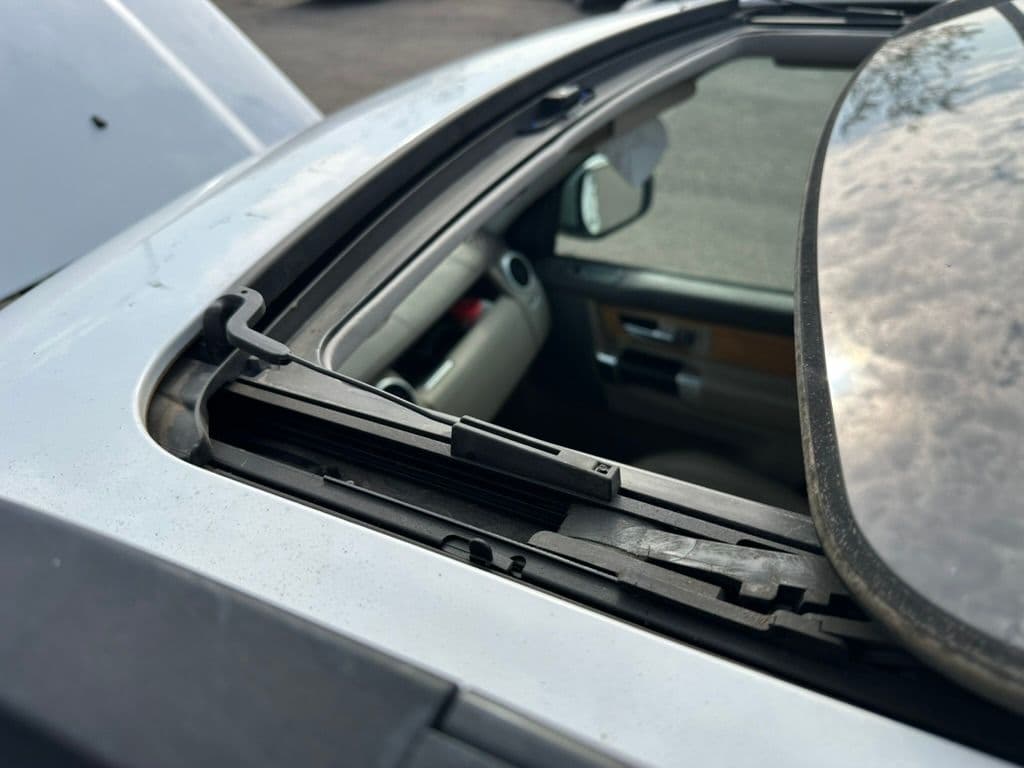
תרגיל רטוב: דליפות גשם מהסאנרוף בדיסקו 3 ו-4
גלה את הסודות לתיקון דליפות גג שמש בלנד רובר דיסקברי 3 או 4 שלך. אל תיתן למעט מים להרטיב את ההרפתקאות שלך—קרא עוד עבור פתרונות!

רוצים רכב חדש? פשוט שדרגו את מערכת המולטימדיה שלכם
נשמו חיים חדשים ב-Land Rover Discovery שלכם בן ה-15 עם שדרוג מולטימדיה מודרני. מוכנים להפוך את הנסיעות שלכם לחוויה טכנולוגית?

Sidewall - כל מה שרצית לדעת על דופן הצמיג ולא העזת לשאול
הבנת דופן הצמיג: המדריך האולטימטיבי שלך לביצועי שטח כשמדובר בשטח, הצמיגים שלך הם חבל ההצלה שלך, וב...