Electrical, Power and Lighting Systems
Modern overland vehicles rely on electricity for far more than just starting the engine. Fridges, lights, navigation systems, water pumps, and communication gear all depend on a well-designed electrical setup. This section covers the fundamentals of building a reliable overland electrical system — from choosing batteries and chargers to wiring accessories and integrating off-road lighting safely. Whether you drive a Land Rover, Wrangler, Land Cruiser, or pickup truck, these guides focus on practical, vehicle-based solutions that work in real conditions.
Adventure2.0 — Reliable power for real overland builds
Modern overland vehicles depend on electricity for far more than just starting the engine. Fridges, auxiliary lights, navigation systems, air compressors, water pumps, and communication gear all draw power from the vehicle. A poorly designed electrical system leads to dead batteries, unreliable accessories, and trip-ending failures.
This section focuses on how to design and build reliable electrical systems for overland vehicles — not for RVs, not for static camps, and not for show cars. The emphasis is on vehicle-based systems that work on the trail, in heat, vibration, dust, and long driving days.
Whether you drive a Land Rover, Wrangler, Land Cruiser, Bronco, or a pickup truck, the principles here apply across platforms.
Why overland electrical systems are different
Overland electrical systems must handle continuous vibration and movement, wide temperature ranges, limited installation space, high-current devices such as fridges and inverters, and long periods away from grid power.
Unlike home or RV systems, vehicle electrical setups must be compact, secure, and tolerant of failure. A loose connection or undersized cable can disable critical systems far from help.
A good overland electrical system should be reliable, simple to diagnose, safe under load, easy to expand, and isolated from the engine’s starting battery.
Core components of an overland power system
Most overland electrical systems are built from the same building blocks.
Batteries
Common battery types include AGM, lithium (LiFePO₄), and portable power stations.
Key decisions include capacity, discharge limits, charging profile, and physical size and mounting location.
Choosing the wrong battery type can limit charging efficiency or shorten battery life.
One of the foundational build guides is how to build a dual battery system for overland vehicles, which walks through battery selection, charging, and wiring.
Charging sources
Typical charging inputs include alternator charging through a DC-DC charger or split charger, solar panels, and shore power.
Each source behaves differently. Alternator charging depends on drive time. Solar depends on weather and mounting position. Shore power is only available at home or campgrounds.
A well-designed system balances at least two charging methods.
Power distribution
Power must be safely distributed to devices such as fridges, lights, pumps, navigation systems, and accessory outlets.
This is done using fuse blocks, circuit breakers, bus bars, and proper grounding.
Good distribution prevents a single fault from taking down the whole system.
Wiring and protection
Electrical reliability depends heavily on correct wire gauge, proper fusing, secure crimping, mechanical protection, and heat management.
Many failures come from undersized cables, poor crimps, vibration damage, and water ingress.
Good wiring is boring — and that is exactly what you want.
Lighting systems
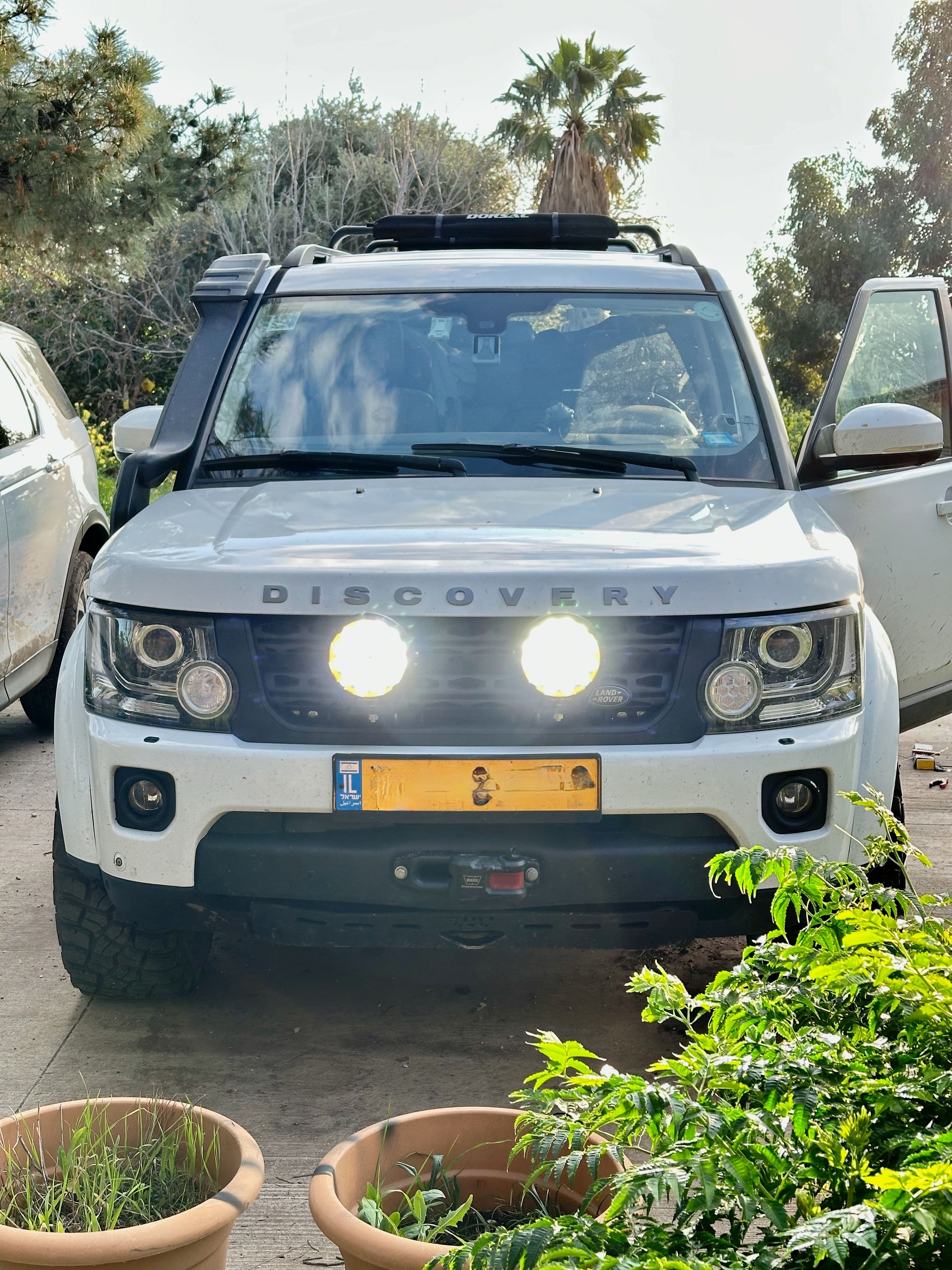
Auxiliary lighting is part of the electrical system, not a separate topic.
Typical lighting setups include driving lights, flood lights, camp lights, and reverse or work lights.
Lighting design must consider power draw, switching logic, legal use on public roads, and beam pattern and mounting height.
Poorly wired lights are one of the most common electrical problems in overland builds.
Common mistakes in overland electrical systems
Some of the most frequent issues seen in vehicle builds include lack of battery isolation between starter and auxiliary batteries, undersized cables causing voltage drop, missing master fuses near batteries, grounding through body panels instead of proper return paths, too many devices on a single circuit, and lack of labeling or documentation.
Most of these problems are avoidable with basic planning.
How this applies to different vehicles
The principles are the same across platforms, but installation differs.
SUVs such as Discovery, Land Cruiser, and Prado usually have limited space and often mount batteries under seats or in rear storage.
Jeeps and Broncos tend to have smaller battery compartments and shorter cable runs.
Pickup trucks offer more space for battery boxes and solar but require longer wiring distances.
The system design stays consistent — only packaging changes.
Build philosophy
Electrical systems are not about comfort alone — they are about independence.
A reliable power system allows you to stay longer in remote places, drive at night safely, keep food cold, communicate and navigate, and solve problems without help.
Every electrical choice is a tradeoff between simplicity, redundancy, weight, cost, and complexity.
The goal is not perfection. The goal is a system that works when you need it.
Start here
If you are planning your first electrical upgrade, begin by understanding how much power your gear uses, choosing the right battery type, selecting a safe charging method, and designing a simple distribution layout.
Then build slowly and test often.
Overlanding rewards systems that are boring, predictable, and easy to fix — and electrical systems are no exception.
Guides in this pillar
Build articles
Related pillars
Performance, Recovery & Protection
Armor, recovery systems, drivability upgrades, and protection mods to handle real trails and real mistakes.
Racks, Storage & Interior Builds
Cargo organization, rack systems, drawer builds, sleeping platforms, and interior layouts that actually work on the road.
Water, Cooking & Comfort
Water systems, camp kitchens, heat/cooling, and the comfort upgrades that make long trips sustainable.