Vehicle Diagnostics
OBD2 Explained: Your Car's Secret Diagnostic System Decoded
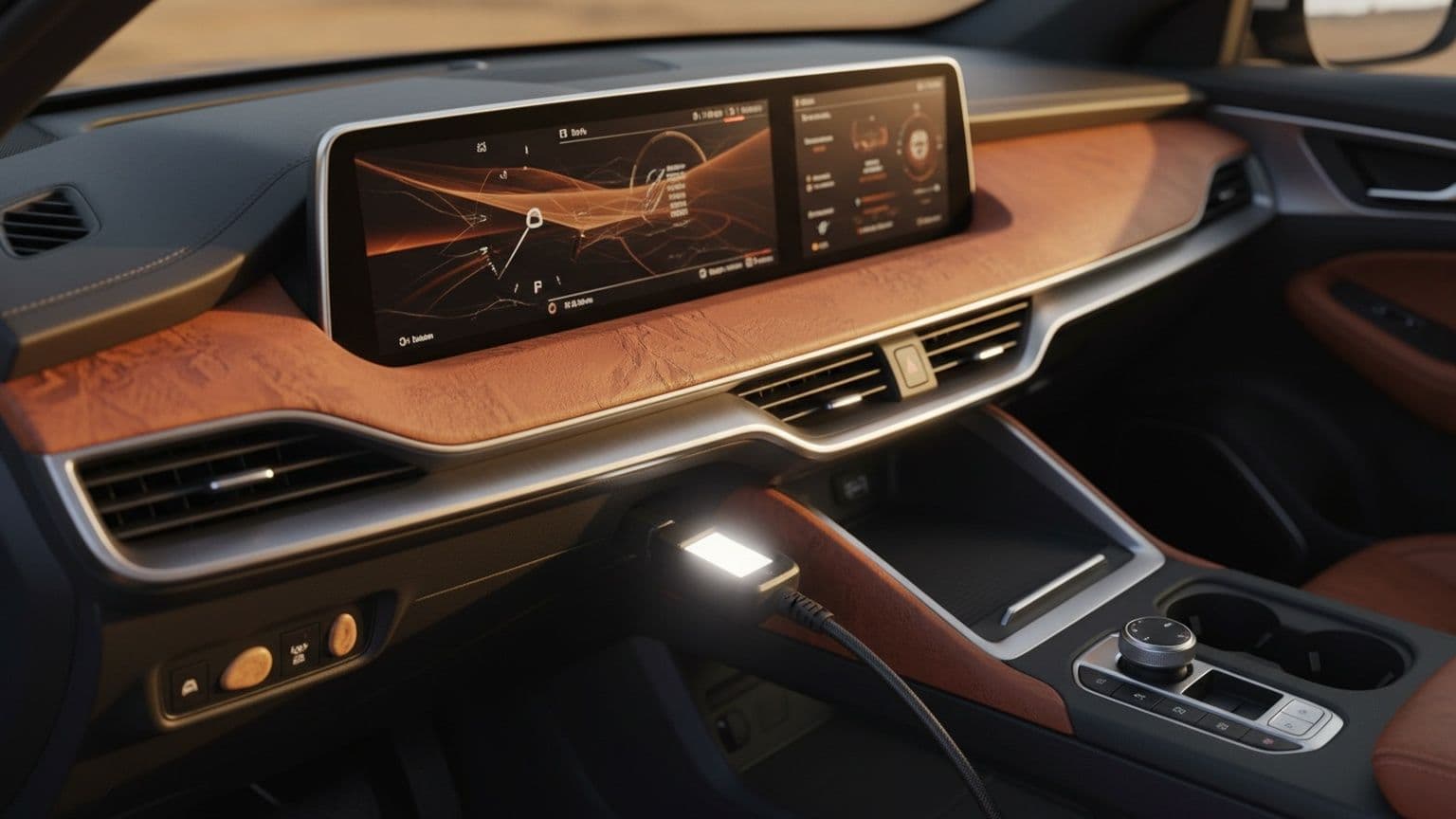
Your Car Has Been Secretly Keeping a Diary (And It's Time You Read It)
Picture this: You're driving down the highway when that dreaded check engine light suddenly glows like an amber warning beacon on your dashboard. Your heart sinks. Is this going to cost you a fortune? Should you pull over immediately? Is your car about to leave you stranded?
Here's what might surprise you: Your car has actually been documenting exactly what's wrong—in incredible detail—and storing that information in a place you can easily access with a simple tool that costs less than a nice dinner out. Welcome to the world of OBD2 diagnostics, where your vehicle transforms from a mysterious mechanical puzzle into an open book.
The OBD2 system (On-Board Diagnostics II) is essentially your car's built-in health monitoring system, and it's been quietly revolutionizing vehicle diagnostics since the mid-1990s. Think of it as your car's personal physician, continuously checking vital signs and keeping detailed medical records. When something goes wrong, instead of leaving you guessing, it creates a specific diagnostic code that tells you exactly what needs attention.
Whether you're a complete beginner to car troubleshooting or someone who's always felt intimidated by automotive technology, this comprehensive OBD2 guide will transform your relationship with your vehicle. By the end of this journey, you'll understand how to use an OBD2 scanner like a pro, decode what your car is trying to tell you, and make informed decisions about maintenance and repairs.
The best part? You don't need to be a mechanic, and you definitely don't need years of training. You just need curiosity and about 20 minutes to learn something that could save you hundreds of dollars and countless hours of automotive anxiety.
What is OBD2 and How Does It Work?
Let's start with the basics, because understanding what OBD2 is doesn't require an engineering degree—just a willingness to peek behind the curtain of modern automotive technology.
- Definition: OBD2 stands for On-Board Diagnostics II, a standardized computer system that lives inside your car.
- Purpose: Originally developed to monitor emission-related components and alert drivers when something isn't working properly, OBD2 has evolved into a comprehensive health monitoring system for your entire vehicle.
- Functionality: Think of OBD2 as your car's central nervous system. Just like your body has sensors that detect pain, temperature, and pressure, your car has dozens of sensors monitoring everything from engine temperature to fuel mixture to exhaust emissions.
- Standardization: Before 1996, every car manufacturer had their own diagnostic system, which meant mechanics needed different tools for different brands. OBD2 changed all that by creating a universal language that all cars could speak.
Here's what makes this system so accessible: OBD2 uses a simple 16-pin connector (usually located under your steering wheel) that allows external devices to "talk" to your car's computer. When you plug in an OBD2 scanner, you're essentially having a conversation with your vehicle, asking it questions like "How are you feeling?" and "Is anything bothering you?"
The system continuously monitors your car's performance and stores information about any problems it detects. When something goes wrong, it doesn't just turn on a vague warning light—it creates a specific diagnostic trouble code (DTC) that pinpoints the exact issue. These codes follow a standardized format, so P0301 means the same thing whether you're driving a pickup truck or a compact car.
What's truly empowering about understanding OBD2 is realizing that your car isn't trying to hide problems from you—it's actually trying to communicate them clearly. You just need to learn its language, and that's exactly what we're going to do together.
The Evolution Story: How OBD2 Became Your Car's Best Friend
Understanding where OBD2 came from helps explain why it's such a game-changer for regular car owners like us. This isn't just another piece of automotive technology—it's the result of a fascinating evolution that transformed cars from mysterious machines into transparent, communicative partners.
- Origins: The story begins in California in the 1980s, when air quality concerns led regulators to demand better emission controls. The original OBD system (OBD1) was a basic attempt at monitoring emissions but was limited and inconsistent across manufacturers.
- Breakthrough: OBD2, mandated for all cars sold in the United States starting in 1996, was a complete reimagining of how cars could communicate their health status.
- Democratization: OBD2 democratized car diagnostics. Before OBD2, diagnosing car problems required expensive, brand-specific equipment that only professional mechanics could afford. Suddenly, the same diagnostic information that mechanics used became available to anyone with a $20 scanner and a few minutes to learn.
Today's OBD2 systems are incredibly sophisticated, monitoring everything from catalyst efficiency to evaporative emissions to misfires. Yet they remain surprisingly user-friendly, translating complex mechanical and chemical processes into simple codes that anyone can look up and understand.
The beauty of this evolution is that it's ongoing. Modern vehicles equipped with OBD2 are constantly getting smarter, monitoring more systems and providing more detailed information. Your car today knows more about its own health than cars from just a decade ago, and it's eager to share that knowledge with you.
Demystifying the OBD2 Port: Finding Your Car's Secret Communication Hub
Let's talk about finding and understanding your car's OBD2 port, because this is where the magic happens—and it's much simpler than you might expect.
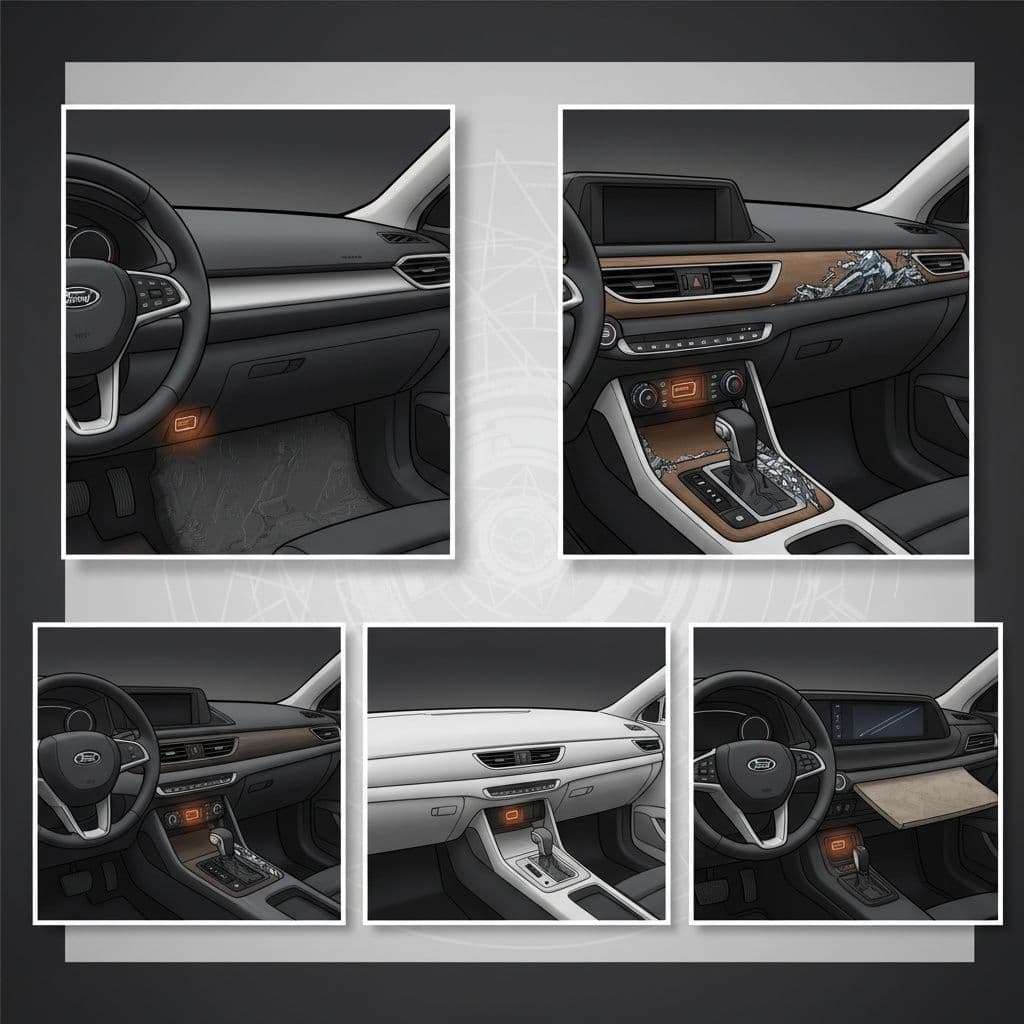
- Location: In about 90% of vehicles, you'll find the OBD2 port somewhere under the dashboard on the driver's side, usually within arm's reach of the driver's seat. It might be:
- Tucked up under the steering column - Hidden behind a small plastic cover - Positioned near your left knee when sitting in the driver's seat
The port itself is distinctive: it's a trapezoidal connector with 16 pins arranged in two rows. It's usually black or dark gray, and it's designed to accept only one type of connector—your OBD2 scanner's cable. You can't accidentally plug anything else into it, which makes it both safe and foolproof.
What's particularly clever about the OBD2 port design is its accessibility. Unlike many automotive components that require tools or contortions to reach, the OBD2 port is positioned for easy access. This isn't an accident—it was specifically designed to be user-friendly, reflecting the system's goal of making diagnostics accessible to everyone, not just professional mechanics.
Some manufacturers get creative with placement. In a few vehicles, you might find the port in the center console, near the gear shifter, or even in the glove compartment. But don't worry—your owner's manual will tell you exactly where to look, and a quick internet search for your specific make and model will usually provide photos and detailed directions.
Here's a pro tip that makes finding the port even easier: look for the small OBD2 symbol, which looks like a computer chip with radiating lines. Many manufacturers place this symbol near the port to help you locate it quickly.
Once you've found your OBD2 port, take a moment to appreciate what you're looking at. This small connector is your gateway to understanding your car in ways that previous generations of drivers could never imagine. It's your vehicle's way of saying, "I'm ready to tell you everything you want to know about how I'm doing."
The port is always powered when your ignition is on, which means your OBD2 scanner will automatically connect and start communicating as soon as you plug it in. No complex setup, no configuration required—just plug in and start learning.
OBD2 Scanners Explained: Choosing Your Perfect Automotive Translator
Selecting an OBD2 scanner doesn't have to feel like choosing between rocket ship control panels. The truth is, these devices have evolved to be remarkably user-friendly, and understanding your options will help you pick the perfect tool for your needs and comfort level.
Types of OBD2 Scanners
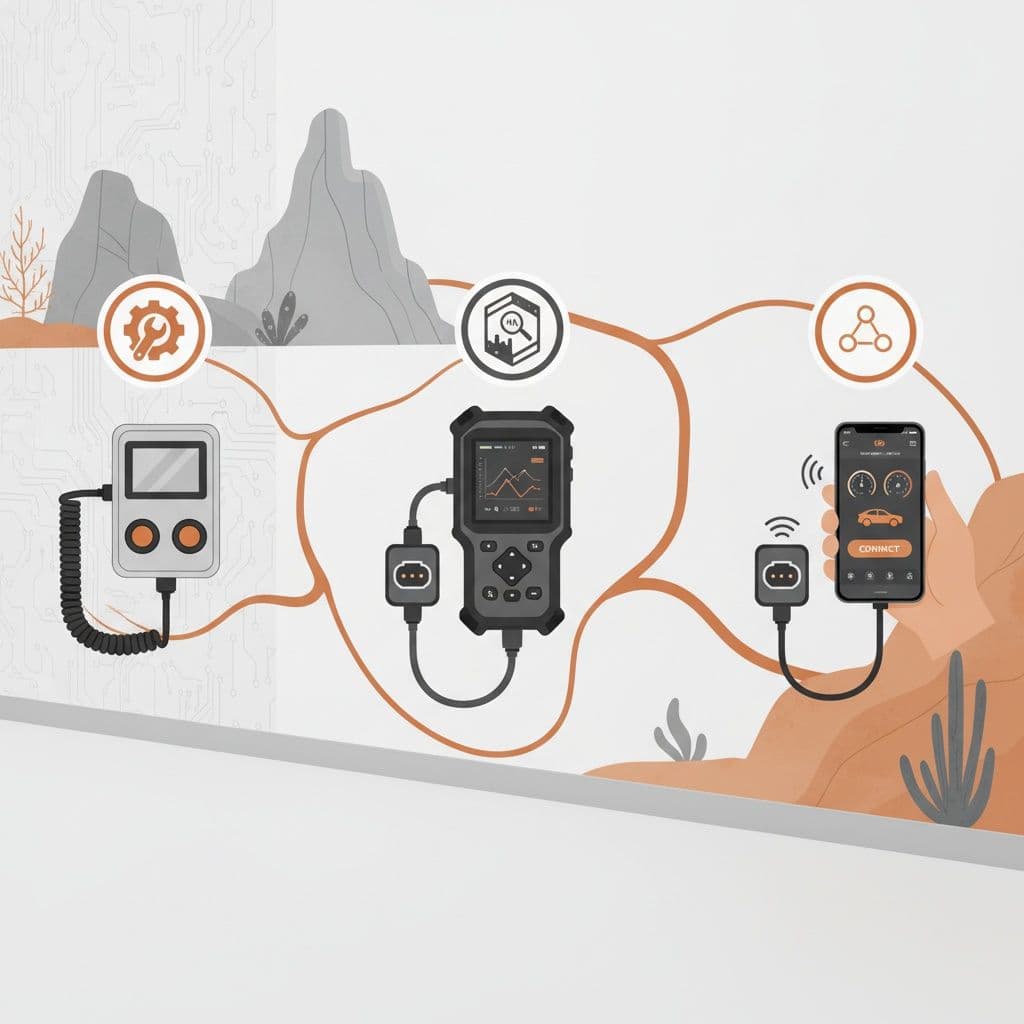
- Basic Code Readers:
- Cost: $15-50 - Function: Read diagnostic trouble codes, display meanings in plain English, and clear codes. - Ideal for beginners who want to diagnose car issues without requiring technical expertise.
- Advanced Scanners:
- Cost: $50-150 - Function: Offer live data streaming, showing real-time engine performance metrics. - Useful for understanding your car's behavior and catching problems before they trigger warning lights.
- Bluetooth OBD2 Adapters:
- Cost: $20-100 for adapter + app - Function: Connect wirelessly to your phone, transforming it into a sophisticated diagnostic tool. - Apps like Torque and OBD Fusion provide detailed information in an interface you're already comfortable with.
The key is matching the tool to your goals. If you just want peace of mind and the ability to clear codes after repairs, a basic reader is perfect. If you're curious about your car's performance or want to monitor things like fuel economy in real-time, an advanced scanner opens up fascinating possibilities.
What's particularly empowering about today's OBD2 scanners is their focus on explanation, not just information. Modern devices don't just spit out cryptic codes—they provide context, suggest possible causes, and often include links to detailed explanations. You're not just getting data; you're getting understanding.
Understanding Diagnostic Trouble Codes: Cracking Your Car's Secret Language
Diagnostic Trouble Codes (DTCs) are your car's way of leaving you detailed notes about its health, and once you understand the system, reading these codes becomes as straightforward as reading a well-organized filing system.
- Code Structure: Every DTC follows a standardized format:
- The first character indicates the system category (P for Powertrain, B for Body, C for Chassis, U for Network/Communication). - The second character indicates whether it's a generic code (0) or manufacturer-specific (1). - The remaining three digits pinpoint the exact problem within that system.
- Common Codes:
- P0301: "Cylinder 1 Misfire Detected" - P0420: "Catalyst System Efficiency Below Threshold" - P0171: "System Too Lean (Bank 1)"
Understanding DTCs is empowering because they aren't verdicts—they're starting points for investigation. A P0301 code doesn't automatically mean you need a new engine; it could be something as simple as a worn spark plug or a loose ignition coil connection. The code points you in the right direction for further investigation.
Modern OBD2 systems also provide "pending" codes—issues the computer has detected but hasn't yet confirmed as persistent problems. These are incredibly valuable for catching problems early, before they trigger warning lights or cause more serious damage.
Here's a perspective shift that changed how I think about DTCs: they're not problems—they're solutions. Each code represents your car successfully identifying and documenting an issue, giving you the information you need to address it proactively.
The beauty of standardized DTCs is that once you understand one, you understand the system. Whether you're dealing with a 2005 Honda or a 2020 Ford, the codes follow the same logic and provide the same type of detailed information about what needs attention.
Real-Time Data: Your Car's Live Health Monitoring Dashboard
Beyond just reading trouble codes, modern OBD2 scanners can access your car's real-time data streams, essentially giving you a live dashboard of your vehicle's vital signs. This capability transforms your relationship with your car from reactive troubleshooting to proactive health monitoring.
When you access live data through your OBD2 scanner, you're seeing the same information your car's computer uses to make split-second decisions about fuel delivery, ignition timing, and emission controls. Parameters like engine RPM, coolant temperature, fuel pressure, oxygen sensor readings, and throttle position update several times per second, giving you an incredibly detailed picture of your engine's performance.
Here's what makes this so practical: you can watch how your car responds to different driving conditions. Accelerate, and you'll see fuel injector pulse width increase and manifold pressure change. Climb a hill, and you'll observe how the engine adjusts timing and fuel delivery to maintain power. This real-time feedback helps you understand your car's behavior and identify subtle issues before they become major problems.
Key Real-Time Parameters to Monitor
- Fuel Trim: Indicates how much your car's computer is adjusting the fuel mixture to maintain optimal combustion.
- Coolant Temperature: Helps identify thermostat problems, coolant leaks, or cooling fan issues before they cause engine damage.
- Fuel Economy: Provides insights into how driving habits affect efficiency.
The key to effectively using real-time data is starting simple. Pick a few parameters that interest you—maybe coolant temperature and fuel economy—and watch how they behave during your regular driving. As you become comfortable with these basics, you can explore more advanced parameters and develop a comprehensive understanding of your vehicle's health patterns.
Troubleshooting Common Issues: Your Step-by-Step Problem-Solving Guide
Let's walk through some real-world scenarios where OBD2 diagnostics transforms mysterious car problems into manageable, understandable issues. These examples will show you how to approach car troubleshooting systematically, using your OBD2 scanner as a detective tool rather than just a code reader.
Scenario 1: The Intermittent Check Engine Light
- Observation: Your check engine light comes on occasionally during highway driving but goes off on its own.
- Action: Scan for codes; you might find P0420 (Catalyst System Efficiency Below Threshold).
- Next Steps: Check live data, specifically oxygen sensor readings before and after the catalytic converter.
Scenario 2: Rough Idle and Poor Performance
- Observation: Your car idles roughly and lacks power during acceleration.
- Action: OBD2 scanner reveals multiple codes: P0301, P0302, and P0303 (misfires in cylinders 1, 2, and 3).
- Next Steps: Look at live data; if fuel trim values are significantly negative, investigate potential issues like a dirty mass airflow sensor or clogged fuel injectors.
Scenario 3: Poor Fuel Economy
- Observation: Fuel economy has gradually decreased over several months.
- Action: OBD2 scanner shows no active trouble codes, but live data reveals long-term fuel trim is consistently positive (+15%).
- Next Steps: Investigate mass airflow sensor readings; cleaning or replacing it often resolves the issue.
Scenario 4: Overheating Concerns
- Observation: Temperature gauge runs higher than normal.
- Action: OBD2 live data shows actual coolant temperature.
- Next Steps: Monitor cooling fan operation and thermostat behavior to determine if there's a cooling system issue.
The key to effective troubleshooting is approaching problems systematically: start with stored codes, examine live data for patterns, research the most common causes for your specific symptoms, and use the information to guide your repair strategy. Your OBD2 scanner doesn't just tell you what's wrong—it helps you understand why problems occur and how different systems interact.
OBD2 for Preventive Maintenance: Catching Problems Before They Catch You
Here's where OBD2 technology truly shines: transforming you from someone who reacts to car problems into someone who prevents them. This shift from reactive to proactive maintenance is one of the most empowering aspects of understanding your vehicle's diagnostic capabilities.
Benefits of Using OBD2 for Preventive Maintenance
- Baseline Readings: Establish normal operating parameters for your vehicle.
- Monthly Checks: Record key parameters like coolant temperature, fuel trim values, and any pending codes.
- Pending Codes: Address issues early to prevent more expensive repairs later.
- Seasonal Monitoring: Understand how weather affects your vehicle's performance.
The financial benefits of preventive OBD2 monitoring are substantial. Catching a failing oxygen sensor early might cost $100-200 to replace, while ignoring it could lead to catalytic converter damage costing $1000-2000. Identifying cooling system issues before they cause overheating prevents potentially catastrophic engine damage.
What's most exciting about preventive OBD2 use is how it changes your relationship with car ownership. Instead of dreading unexpected breakdowns and expensive surprises, you develop confidence in your ability to monitor and maintain your vehicle's health proactively.
Beyond Basic Codes: Advanced OBD2 Applications and Insights
Once you're comfortable with basic code reading and live data monitoring, OBD2 technology opens up fascinating possibilities for deeper vehicle understanding and optimization. These advanced applications demonstrate why OBD2 is considered one of the most powerful tools available to modern car owners.
Advanced Applications
- Performance Analysis: Monitor parameters like ignition timing and fuel injection timing to optimize performance.
- Environmental Impact Monitoring: Track emission-related parameters to make environmentally conscious choices.
- Fleet Management: Use OBD2 technology for sophisticated fleet monitoring capabilities.
- Integration with Smart Home Systems: Receive automated notifications about vehicle status and maintenance needs.
- Machine Learning and Predictive Analytics: Analyze patterns in your vehicle's data to predict maintenance needs and optimize fuel efficiency.
The key to leveraging advanced OBD2 applications is starting with solid fundamentals and gradually expanding your capabilities as your interest and expertise grow. Each advanced application builds on basic code reading and live data monitoring skills, making the learning curve manageable and rewarding.
Safety First: Important Considerations and Best Practices
While OBD2 technology is designed to be user-friendly and safe, understanding proper usage practices ensures you get the most benefit while avoiding potential issues. These guidelines will help you use your OBD2 scanner confidently and effectively.
Best Practices
- When and Where to Scan: Always perform OBD2 scanning when your vehicle is safely parked with the engine running and warmed to normal operating temperature.
- Understanding Code Clearing Implications: Clearing codes resets your car's emission monitoring systems, which need time to complete their self-tests.
- Recognizing Scanner Limitations: OBD2 scanners can't diagnose mechanical issues that don't trigger electronic sensors.
- Protecting Your Vehicle's Electronics: Ensure your scanner is designed for your vehicle's year and specifications.
- Data Privacy and Security Considerations: Understand how your data is stored and shared when using smartphone apps or cloud-connected scanners.
- Emergency Situations: Treat serious problems indicated by your scanner as immediate safety concerns.
Choosing Your First OBD2 Scanner: A Practical Buying Guide
Selecting your first OBD2 scanner should feel exciting, not overwhelming. With dozens of options available at every price point, understanding what features matter for your specific needs will help you choose a tool that grows with your automotive curiosity rather than frustrating your learning journey.
Scanner Options
- Budget-Friendly Code Readers ($15-50): Ideal for beginners who want to understand check engine lights and clear codes.
- Mid-Range Scanners ($50-150): Offer live data monitoring and more detailed diagnostic capabilities.
- Advanced Scanners ($150-400): Provide professional-level capabilities for serious automotive enthusiasts.
- Smartphone-Based Solutions ($20-100 for adapter + app): Leverage your phone's capabilities for sophisticated diagnostics.
Key Features to Prioritize
- Clear, easy-to-read displays and intuitive menu systems.
- Update capabilities to maintain compatibility with newer vehicles.
- Battery life and power management for practical use.
I recently made a comparison of OBD Scanners for Landrover Discovery 3/4, but you may want to take a look at Best OBD Scanners for Land Rover Discovery 4 (LR4) just to understand how these products compare.
FAQ Section
What is OBD2 and how does it work?
OBD2 stands for On-Board Diagnostics II, a standardized system that monitors your vehicle's performance and alerts you to issues through diagnostic trouble codes (DTCs).
How can I use an OBD2 scanner without technical knowledge?
You can use a basic code reader to check for diagnostic trouble codes and their meanings in plain English, making it accessible for beginners.
What are the benefits of using OBD2 for car diagnostics?
OBD2 provides real-time data, standardized codes for easy troubleshooting, and empowers car owners to understand and maintain their vehicles proactively.
What is an easy OBD2 troubleshooting guide for beginners?
Start by checking for stored codes, examining live data for patterns, and researching common causes for your specific symptoms to guide your repair strategy.
How do I diagnose car issues with an OBD2 scanner?
Plug in the scanner, read the diagnostic trouble codes, and use live data to monitor your vehicle's performance, helping you pinpoint issues effectively.
Conclusion
Understanding OBD2 diagnostics empowers you to take control of your vehicle's health. By learning how to use an OBD2 scanner, you can decode your car's messages, troubleshoot issues, and engage in preventive maintenance, ultimately saving time and money while enhancing your driving experience. Embrace this technology, and transform your relationship with your vehicle into one of partnership and understanding.
Community
Join the conversation
No comments yet. Be the first to share your thoughts!
Leave a comment
Keep tinkering
More adventure experiments
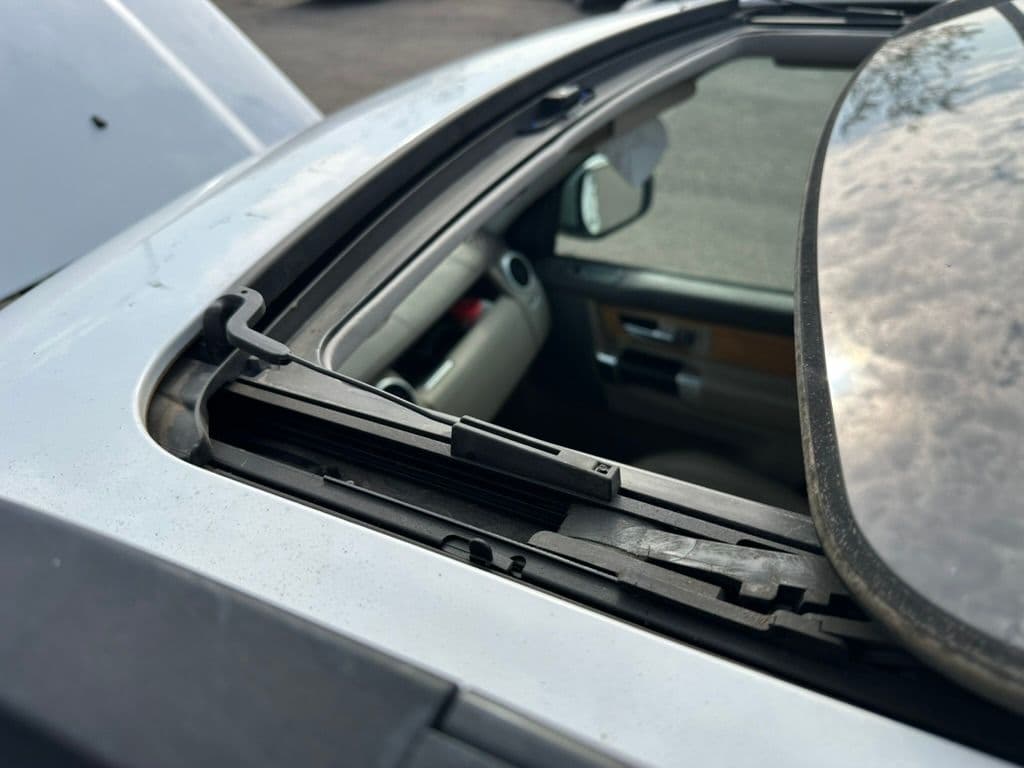
Sunroof Drainage Woes: Solving Land Rover Discovery 3 & 4 Leaks
Uncover the secrets to fixing sunroof leaks in your Land Rover Discovery 3 or 4. Don’t let a little water dampen your adventures—read on for solutions!

Revamp Your Ride: Upgrade the Infotainment in Your 15-Year-Old Car
Breathe new life into your 15-year-old 4x4 with a modern infotainment upgrade. Ready to transform your drives into a tech-savvy experience?

Dead Battery Lockout: 7 Ways to Unlock Your Car
Stuck outside your car? Don't panic! Discover 7 clever ways to unlock your car and regain access to your belongings. Ready to get back on the road?