Trail Craft
Kinetic Rope or Static Strap: The Recovery Choice That Keeps Your Bumper Attached
Kinetic Rope vs Static Strap: The Recovery Choice That Keeps Your Bumper Attached
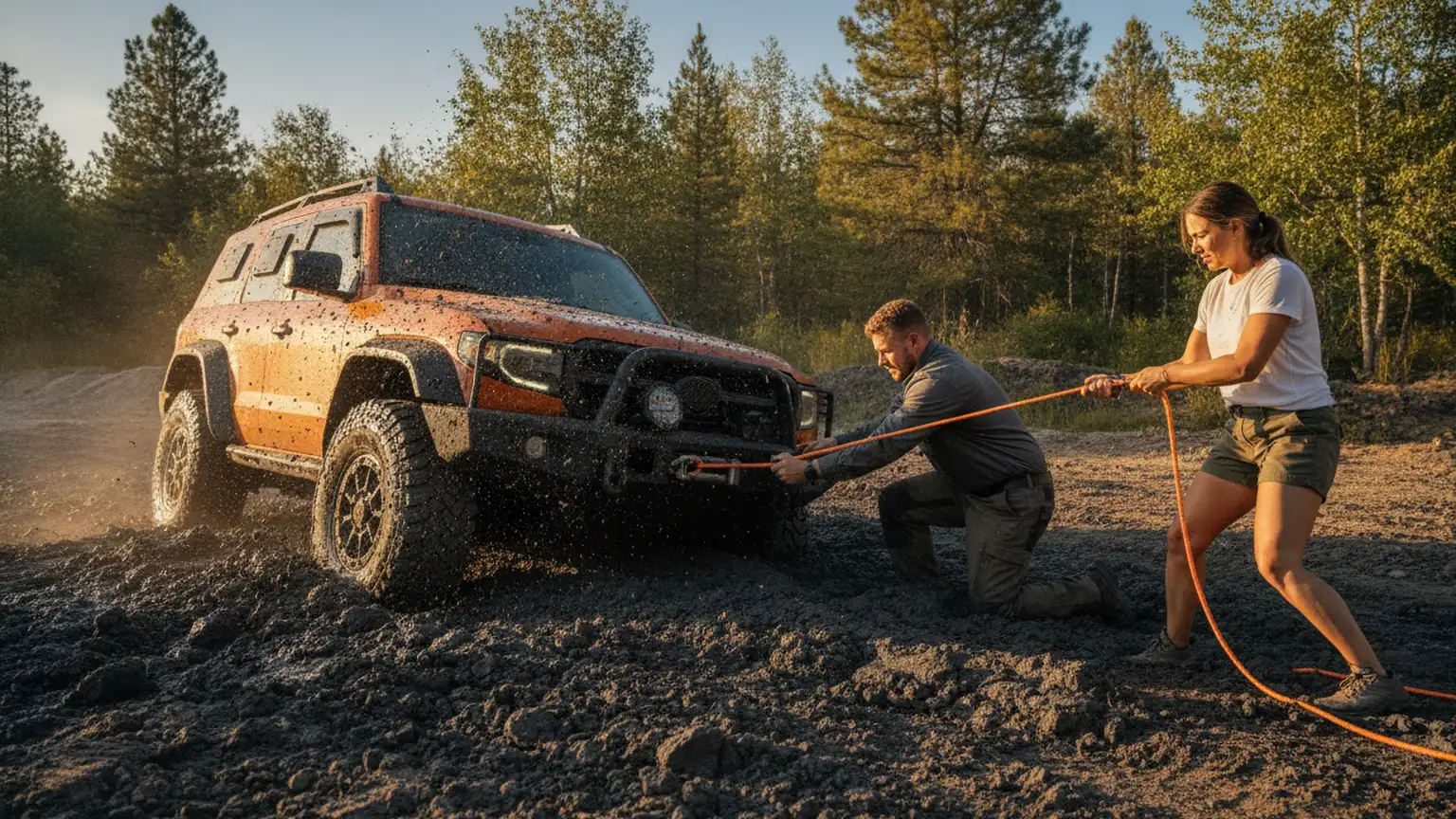
Picture this: two friends, a Land Rover Discovery, and a sandy wash that decided to become a trap. This is a classic vehicle recovery scenario, with the sun setting and casting long shadows over the desert landscape. The Discovery, now belly-deep in sand, jolts forward, then halts abruptly. One friend, an eager tinkerer, fetches a cheap tow strap, clips it onto the vehicle's bumper, and gives a thumbs-up. As the other friend hits the gas, the strap snaps, sending the hook into the air like a rogue projectile. The lesson? Recovery gear matters.
Recovering a stuck vehicle is an art form that requires the right tools, a bit of patience, and a sprinkle of wisdom. The choice between a kinetic rope and a static strap often determines whether your vehicle—and your pride—remain intact. In this guide, we'll explore the virtues of both tools, uncover their ideal applications, and arm you with the knowledge to make informed decisions during off-road recoveries.
What is a Kinetic Rope?
A kinetic rope is a flexible recovery tool designed to stretch and absorb energy during the recovery process. When a vehicle is stuck, the kinetic rope's elasticity allows it to stretch under load, storing energy that helps pull the stuck vehicle out with a smooth, controlled motion. Unlike static straps, which remain rigid, kinetic ropes reduce the likelihood of sudden jerks that can damage recovery points or vehicles.
Why Choose a Kinetic Rope?
- Smooth Recovery: The elasticity of kinetic ropes ensures a gradual application of force, reducing the risk of damage.
- Stored Energy: This energy helps recover vehicles in mud, sand, or snow by providing a dynamic pull.
- Versatility: Suitable for a variety of off-road scenarios where a little extra tug is necessary.
According to Yankum Ropes, a quality kinetic rope should have a minimum breaking strength of 30,000 lbs, making it suitable for most off-road vehicles.
What is a Static Strap?
A static strap is a non-elastic recovery tool used for towing or pulling vehicles in a controlled manner. Static straps are ideal for situations where a steady, linear pull is more effective than a dynamic jerk. These straps are typically used for short-distance recoveries or to tow a vehicle out of a precarious position.
Why Choose a Static Strap?
- Controlled Pull: Offers a steady and predictable force, minimizing sudden movements.
- Simplicity: Easy to use and requires minimal setup compared to kinetic ropes.
- Durability: Often more resistant to wear and tear due to their lack of stretch.
Trail Owl recommends investing in high-quality static straps to avoid failures during recovery. Cheap straps can snap under stress, turning into dangerous projectiles.
Kinetic Rope vs. Static Strap: A Practical Comparison
Choosing between a kinetic rope and a static strap boils down to understanding your recovery needs. Here’s a practical comparison to help you decide:
Stretch and Flexibility
- Kinetic Rope: Offers significant stretch, which is crucial for dynamic recoveries. The rope's elasticity stores kinetic energy, providing a powerful yet controlled recovery force.
- Static Strap: Minimal stretch, making it ideal for towing or situations where controlled force is necessary.
Recovery Scenarios
- Kinetic Rope: Best for off-road recoveries where vehicles are mired in mud, sand, or snow. The stretch helps in pulling vehicles out smoothly.
- Static Strap: Suitable for towing vehicles on firm ground or when a slow, steady pull is needed.
Safety Considerations
- Kinetic Rope: Requires careful handling to avoid injuries from recoil. Always ensure the rope and attachments are in good condition.
- Static Strap: Less risky in terms of recoil but can still cause damage if not used properly. Always use rated recovery points.

How to Recover a Stuck Vehicle Safely
Effective vehicle recovery is more than just choosing the right tool; it's about understanding the process and prioritizing safety. Here's a step-by-step guide to recovering a stuck vehicle:
- Assess the Situation: Before attempting recovery, evaluate the conditions. Is the vehicle deeply embedded in mud or sand? Are there obstacles that could complicate recovery?
- Select the Right Tool: Choose between a kinetic rope or static strap based on the scenario. For dynamic recoveries, opt for a kinetic rope. For controlled pulls, a static strap is preferable.
- Prepare Recovery Points: Ensure all recovery points are rated for the task. Avoid using painted tow hooks or non-rated points, as they can fail under stress.
- Clear the Area: Ensure bystanders are at a safe distance from the recovery zone to avoid injuries from snapping ropes or straps.
- Use Traction Aids: Before hooking up, consider using traction boards or a shovel to ease the initial movement. Traction boards like MaxTrax or ARB Tred Pro can provide the grip needed to break free.
- Hook Up Safely: Connect the rope or strap to the recovery points using soft shackles. These reduce the risk of damage compared to metal shackles.
- Coordinate with the Driver: Establish clear communication with the driver of the stuck vehicle. Use signals or radios to ensure synchronized efforts.
- Execute the Recovery: For kinetic ropes, use a gentle rolling start to allow the rope to stretch and store energy. For static straps, apply steady pressure.
- Secure the Gear: After recovery, inspect all gear for damage. Replace any worn or frayed items to ensure future safety.
Off-Road Recovery Safety Tips
Safety is paramount during any off-road recovery operation. Here are some essential tips to keep in mind:
- Use Gloves: Always wear gloves when handling ropes or straps to prevent injuries from friction or sharp edges.
- Inspect Gear Regularly: Check recovery gear for signs of wear and tear before every use.
- Avoid Sudden Jerks: Apply force gradually to avoid snapping ropes or damaging vehicles.
- Use Rated Equipment: Only use recovery points, ropes, and straps that are rated for your vehicle's weight.
- Stay Informed: Continuously learn from experienced off-roaders and update your techniques.

Screenshot-Ready Checklist: Don't Pull on a Painted Tow Hook
Before you head out for your next adventure, here's a handy checklist you can screenshot and keep on your phone:
- [ ] Assess the recovery situation and choose the right tool.
- [ ] Ensure all recovery points are rated and secure.
- [ ] Clear the recovery area of bystanders.
- [ ] Use traction aids like boards or shovels.
- [ ] Connect using soft shackles, not metal.
- [ ] Establish clear communication with the driver.
- [ ] Apply force gradually to prevent damage.
- [ ] Inspect and replace any damaged gear post-recovery.
Frequently Asked Questions
How to recover a stuck vehicle?
To recover a stuck vehicle, assess the situation, choose the appropriate recovery tool (kinetic rope or static strap), prepare rated recovery points, clear the area, use traction aids, hook up safely, and apply force gradually to pull the vehicle free.
What is the difference between kinetic rope and static strap?
Kinetic ropes stretch under load, storing energy for dynamic recoveries, while static straps provide a steady, controlled pull without stretching, suitable for towing.
Why use a kinetic rope for vehicle recovery?
Kinetic ropes are ideal for off-road recoveries where vehicles are stuck in mud, sand, or snow, as their elasticity provides a gentle, effective pull.
Are static straps safe for towing?
Yes, static straps are safe for towing when used with rated recovery points and applied with steady pressure, avoiding sudden jerks.
How do I choose the right recovery gear?
Choose recovery gear based on your vehicle's weight, the terrain you expect to encounter, and the types of recoveries you anticipate. Always opt for high-quality, rated gear.
What are the risks of using cheap recovery straps?
Cheap recovery straps can snap under stress, turning into dangerous projectiles that may cause injury or damage.
How do traction boards help in recovery?
Traction boards provide grip and aid in breaking free from soft surfaces like sand or mud, making recoveries easier and safer.
What safety gear should I carry for off-road recoveries?
Carry gloves, soft shackles, rated recovery points, traction boards, and a first aid kit to ensure a safe recovery operation.
Conclusion
The safest recovery is the one you practiced before you needed it. Whether you're using a kinetic rope for a dynamic snatch or a static strap for a controlled pull, the key is to match the tool to the stuck situation. Always prioritize rated recovery points, use gloves, and maintain a clear line of communication. Remember, adventure is better when you build it—and with the right recovery gear, you can build your adventures safely and confidently. Explore more maker-style trail guides and enhance your off-road experiences today at Adventure2.0.
Community
Join the conversation
No comments yet. Be the first to share your thoughts!
Leave a comment
Keep tinkering
More adventure experiments

Solo Overlanding: The Essential Comms Kit for Adventurers
Explore essential communication tools for solo overlanders, including satellite messengers and GPS devices, to ensure safety and connectivity on your adventurous journeys.

Kinetic Recovery Rope or Static Strap: The Recovery Choice That Keeps Your Bumper Attached
Choosing between a kinetic recovery rope and a static strap can save your vehicle from damage during off-road recoveries, ensuring a safe and effective extraction.

Stay Cool: Essential Offroading Tips for Hot Weather Adventures
Prepare for summer off-roading with essential tips to keep you and your vehicle cool. Discover how to prevent overheating and stay hydrated on your adventures!