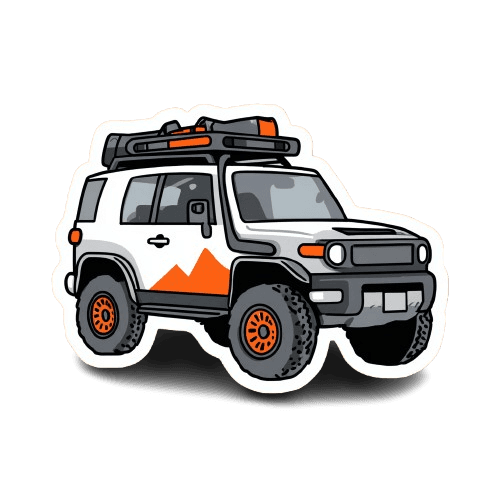
Overland vehicles carry far more equipment than daily drivers. Recovery gear, water, food, tools, spare parts, and personal items must all fit inside or on the vehicle. Poor storage leads to wasted space, shifting loads, noise, and difficulty accessing essential gear when it is needed.
A good storage system turns a crowded vehicle into a functional workspace. It allows gear to be secured, organized, and reached quickly without unloading half the vehicle. Interior builds are not about luxury — they are about efficiency and safety on long trips.
Roof racks and exterior mounts increase carrying capacity but also change how a vehicle behaves. Weight placed high raises the center of gravity and affects braking, cornering, and side-slope stability.
External mounting is best used for bulky or dirty items such as spare tires, traction boards, fuel cans, and recovery equipment. Rack systems must be chosen based on load rating, mounting method, and compatibility with tents, awnings, or lighting.
Mounting points should be inspected regularly. Loose bolts and cracked brackets can lead to dangerous failures on rough trails.
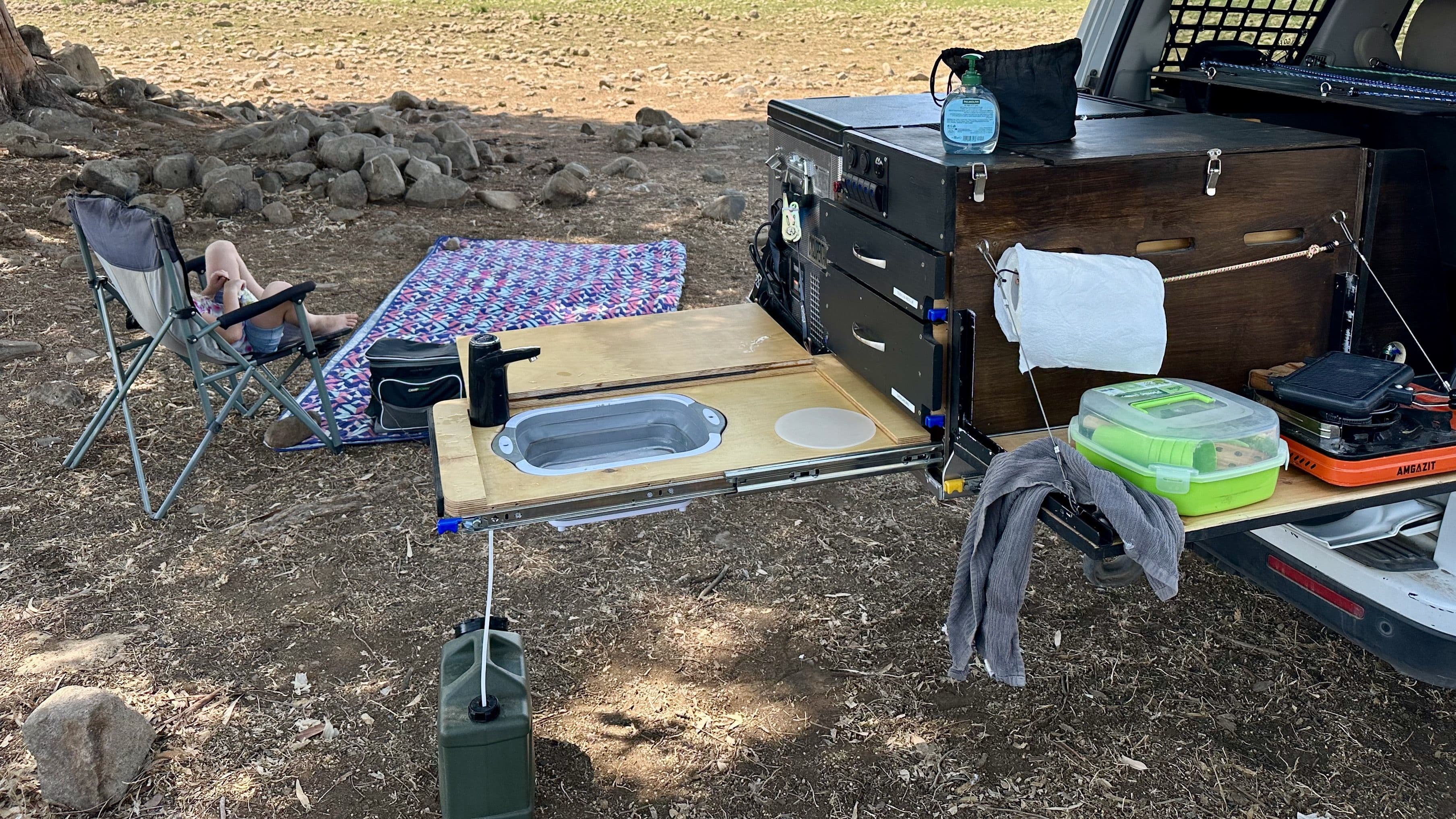
Drawer systems are one of the most common interior upgrades for overland vehicles. They provide a flat platform for sleeping or cargo while allowing access to tools and kitchen gear below.
A good drawer system should be strong, quiet, and easy to service. It must handle vibration and weight without binding or loosening over time. Materials, slide choice, and fastening method all affect durability.
Custom systems allow the layout to match the vehicle and the type of travel. Commercial systems save time but may compromise space efficiency.
Vehicle fridges require secure mounting and adequate ventilation. A poorly mounted fridge can tip over or block airflow, reducing cooling efficiency and increasing power consumption.
Food storage must balance accessibility with cleanliness. Raw food, cooking tools, and waste should be separated to prevent contamination and odor. Fridge slides improve access but add weight and height, which must be considered in the overall layout.
Proper placement of the fridge affects not only convenience but also vehicle balance.
Many overland vehicles double as sleeping spaces. A sleeping platform must support body weight while leaving room for storage underneath.
Height is critical. Too high and headroom disappears. Too low and drawers or boxes will not fit. Platforms should be designed around the tallest user and the largest gear items.
Ventilation, lighting, and access to emergency exits must be considered when turning a cargo area into a sleeping space.
Trips vary in length and purpose. A weekend trip requires less gear than a multi-week expedition. Modular storage allows the interior to be reconfigured without rebuilding the entire system.
Common modular elements include removable boxes, fold-down tables, quick-release mounts, and adjustable tie-downs. Flexibility reduces the need to permanently commit space to rarely used equipment.
The best systems grow with the build instead of forcing a full redesign each time gear changes.
Unsecured cargo becomes dangerous during sudden stops or rollovers. Heavy items can cause injury or damage when they shift.
Tie-down points, cargo barriers, and structural mounts are part of the storage system. Loads should be restrained in all directions, not just vertically.
Tools and recovery gear should be accessible without unloading the vehicle. Emergency equipment must be reachable even when the vehicle is stuck or tilted.
SUVs offer enclosed cargo areas but limited width and height. Storage must be compact and shaped around wheel arches and seat mounts.
Jeeps and short-wheelbase vehicles trade cargo volume for maneuverability. Storage often extends upward or onto external racks.
Pickup trucks provide large open beds but require secure enclosures to protect gear from weather and theft. Drawer systems in truck beds must handle long spans and heavy loads.
Each vehicle type requires different layouts, but the same principles apply: secure, balanced, and accessible.
Storage systems should reduce effort, not add it. A well-built interior allows the driver to focus on driving and navigation instead of searching for gear.
Every decision involves tradeoffs between space, weight, cost, and complexity. The goal is not maximum storage, but useful storage that supports the way the vehicle is actually used.
A clean, quiet, and predictable interior makes long trips easier and safer.
If you are planning your first storage upgrade, begin by listing the gear you carry most often and how frequently each item is used. Design the layout so the most important tools are the easiest to reach.
Build in stages: secure loose items first, then add drawers or platforms, and finally optimize for comfort and convenience.
Overland storage is not about fitting everything in. It is about fitting the right things in the right places.