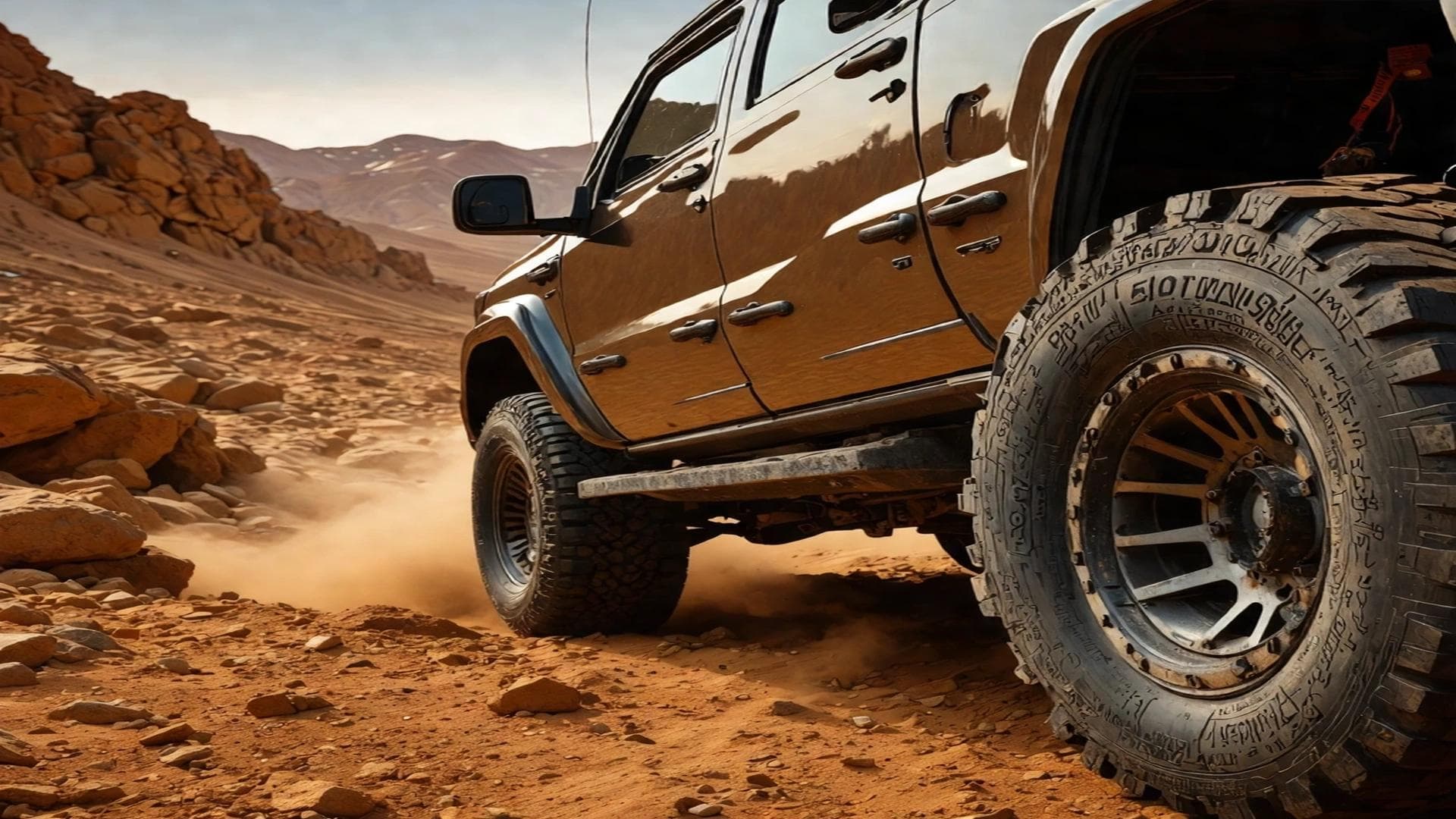
Overlanding pushes vehicles beyond normal road use. Steep climbs, loose surfaces, deep ruts, rocks, mud, and sand all place stress on traction, driveline components, and bodywork. Unlike recreational off-roading, overlanding also adds weight from gear, water, fuel, and electrical systems, which further affects handling and braking.
Performance upgrades are not about speed. They are about maintaining control, avoiding damage, and keeping the vehicle moving when conditions get difficult. Recovery gear exists for the moments when physics wins and the vehicle stops moving on its own.
A capable overland vehicle should be able to climb, descend, turn, and recover itself safely without relying on external help.
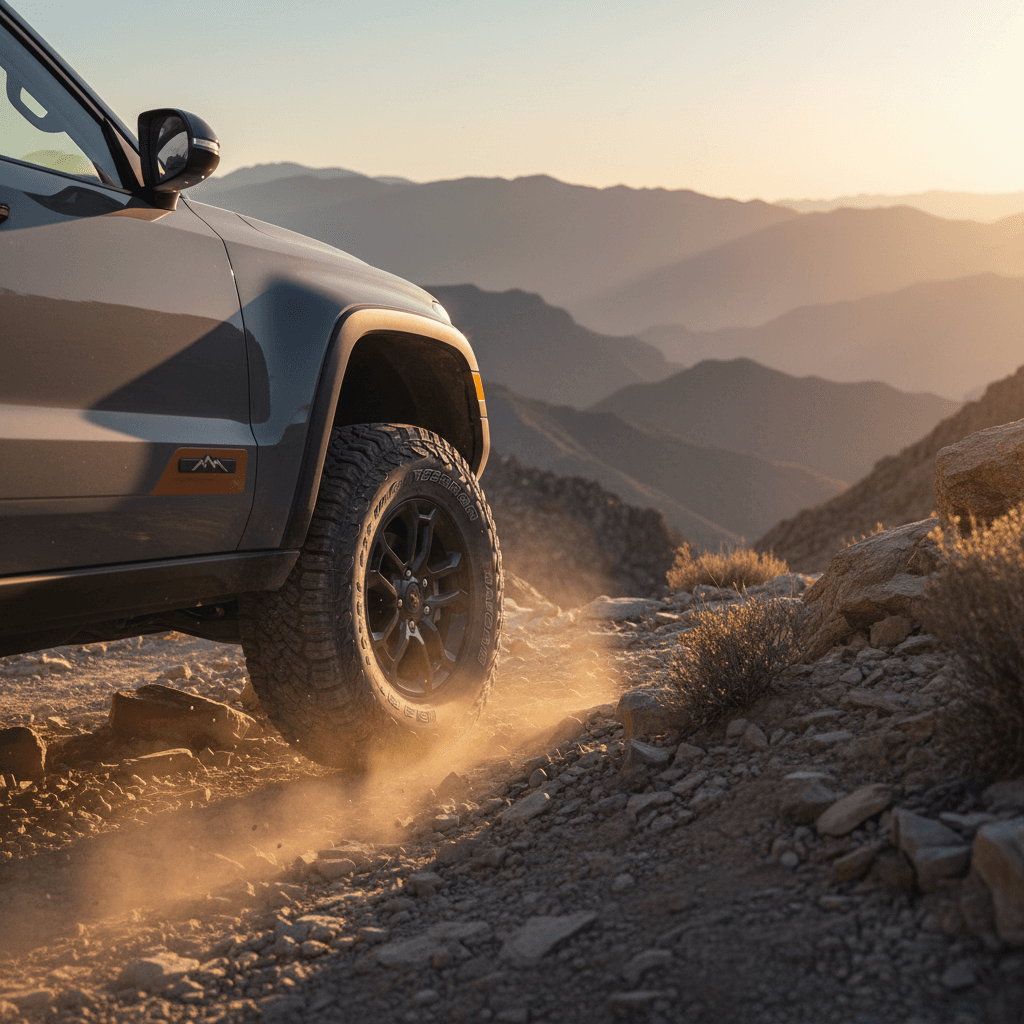
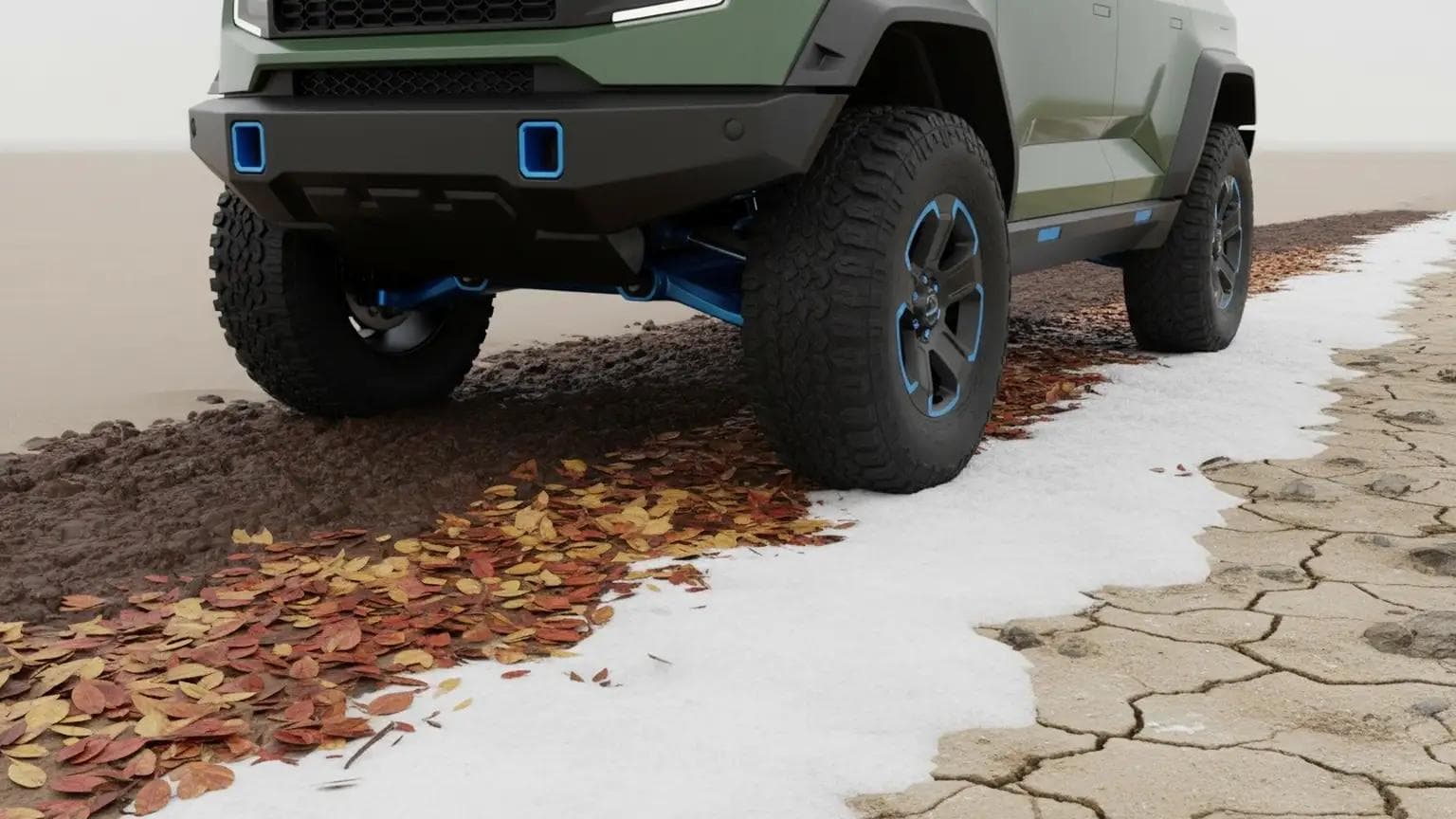
The foundation of off-road performance is traction. Tires, tire pressure, weight distribution, and suspension geometry all affect how much grip reaches the ground.
Key factors include tire type, tread pattern, sidewall strength, and correct inflation for terrain. Lower pressures increase footprint and traction but increase risk of sidewall damage. Higher pressures improve steering precision but reduce grip on loose surfaces.
Approach angle, departure angle, and breakover angle determine which obstacles the vehicle can clear without scraping or grounding. Driving technique matters as much as hardware. Throttle control, line choice, and momentum management often prevent the need for recovery in the first place.
No matter how capable a vehicle is, recovery is eventually necessary. Recovery systems should be treated as safety equipment, not accessories.
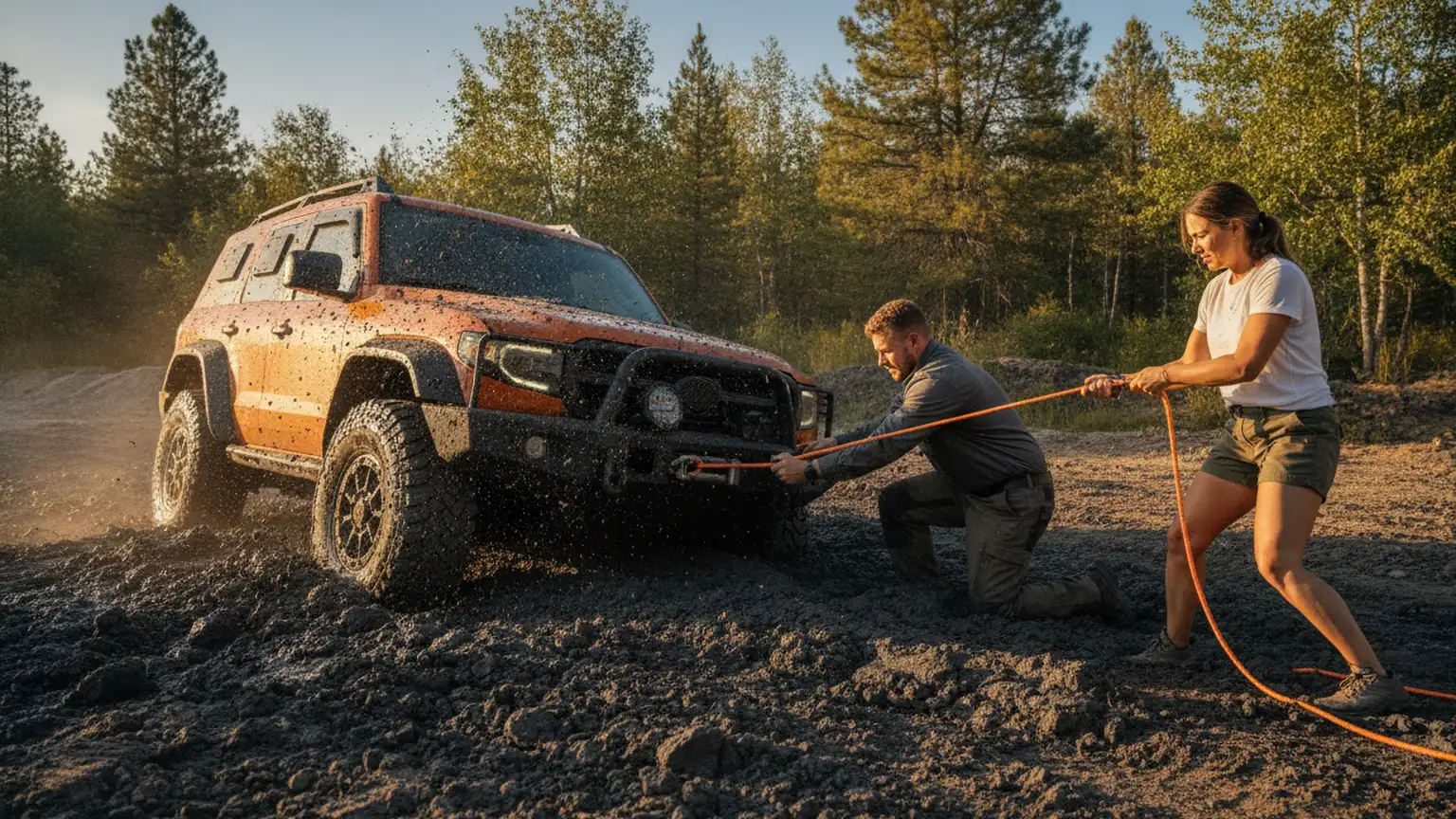
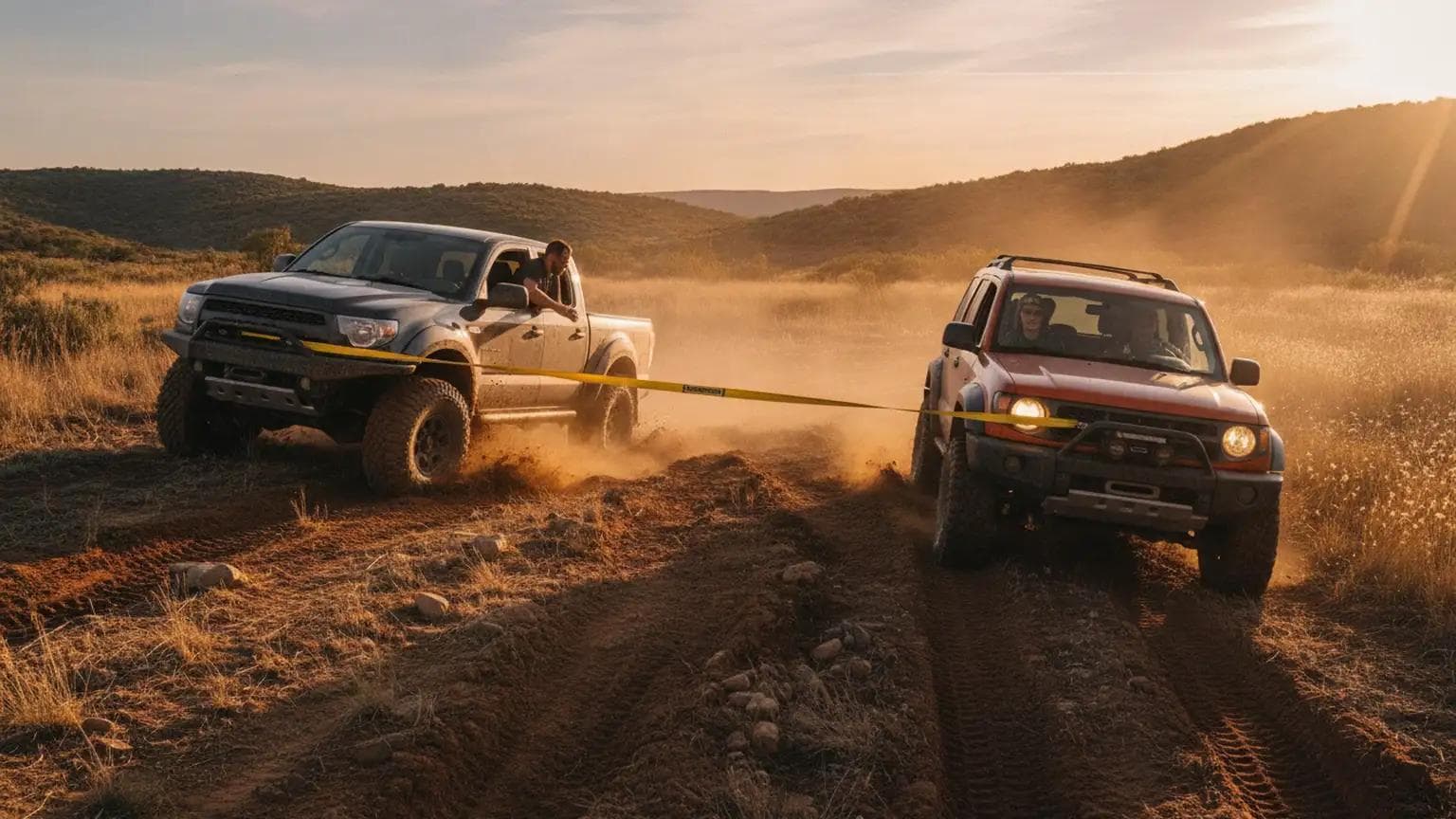
Common recovery tools include winches, kinetic ropes, tow straps, shackles, traction boards, jacks, and tree protection straps. Each tool is designed for a specific type of recovery and must be used correctly to avoid injury or damage.
Winches provide controlled pulling force and are most effective when paired with solid mounting points and proper electrical supply. Manual recovery tools require more effort but work without electrical power.
Recovery planning should include where to attach, how to distribute load, and how to keep bystanders clear of tensioned lines.
Off-road travel exposes vulnerable vehicle parts to impact. Radiators, oil pans, differentials, and steering components are all at risk when driving over rocks or uneven terrain.
Protective equipment such as skid plates, rock sliders, and differential guards reduce the chance of trip-ending damage. These components do not improve performance directly but allow the vehicle to survive contact with the terrain.
Protection choices must consider weight, mounting method, and serviceability. Poorly mounted armor can transfer impact forces into the chassis instead of absorbing them.
Adding gear and accessories changes how a vehicle behaves. Roof racks, spare tires, drawers, and fuel cans raise the center of gravity and increase stopping distance.
Good performance depends on balanced weight distribution and predictable handling. Heavy items should be kept as low and as central as possible. Suspension tuning and tire selection should match the actual loaded weight of the vehicle, not the empty factory configuration.
A vehicle that is well balanced is easier to control and less likely to require recovery.
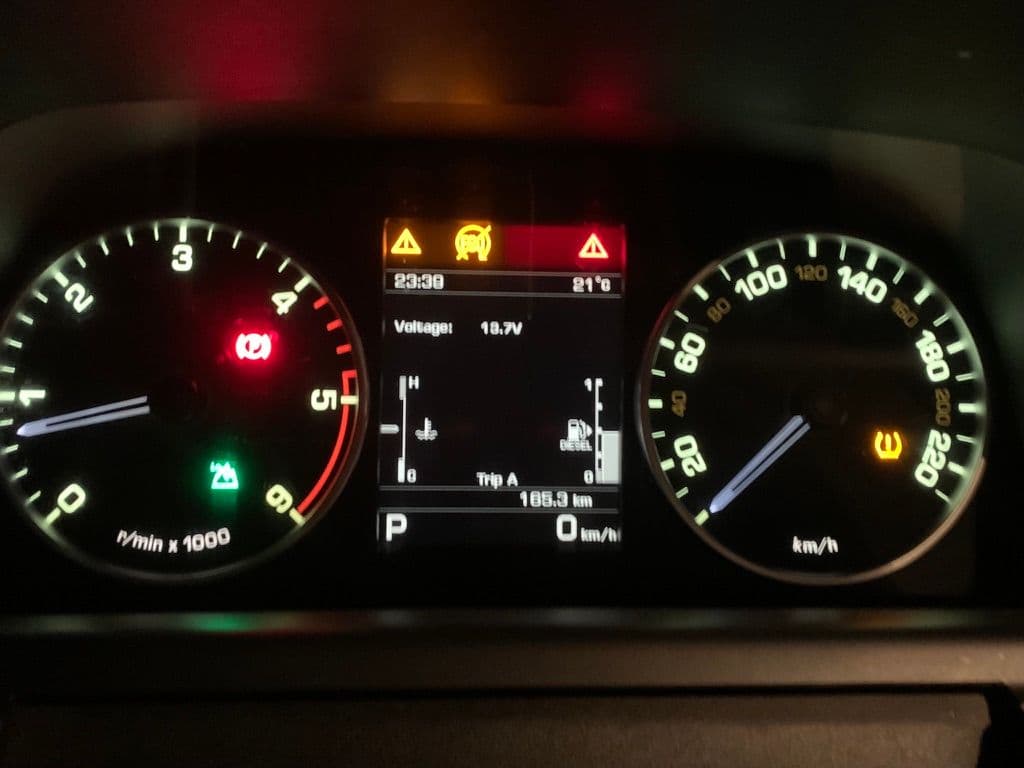
Mechanical and electronic problems are part of off-road travel. Sensors, traction control systems, and drivetrains all operate under stress when driven off-road.
Diagnostic tools allow drivers to understand faults, reset systems, and decide whether a problem is safe to drive on or requires repair. These tools become part of the recovery system by helping prevent further damage and enabling informed decisions in remote areas.
Preparation includes understanding warning lights, fault codes, and basic mechanical symptoms before a trip begins.
If you only add one diagnostic tool to your off-road kit, make it an OBD scanner. Start with Using an OBD Scanner for Overland Travel and Off-Road Recovery to learn what to check on the trail, what you can safely reset, and how to choose the right tool.
SUVs often combine moderate ground clearance with independent suspension and electronic traction aids. Their performance depends heavily on tire choice and weight management.
Jeeps and short-wheelbase vehicles offer better breakover angles and maneuverability but carry less gear and fuel.
Pickup trucks provide payload and space but require careful suspension setup and protection due to longer wheelbases and exposed driveline components.
The terrain challenges are similar across platforms. The solutions change mainly in scale and packaging.
Performance upgrades should make the vehicle easier to control, not harder to drive. Recovery tools should be chosen for reliability and safety, not appearance. Protection should prevent damage without introducing new weak points.
Every upgrade involves tradeoffs between weight, cost, complexity, and benefit. The goal is not to build an extreme vehicle, but a predictable one that can handle rough terrain repeatedly without failure.
Capability comes from preparation, not bravado.
If you are improving your vehicle for off-road travel, begin by evaluating traction, recovery options, and vulnerable components. Understand how your vehicle behaves when loaded and identify which parts are most exposed to damage.
Build in layers: improve grip first, add recovery tools second, and protect critical parts third.
Overland performance is measured not by how extreme the terrain is, but by how reliably the vehicle completes the journey.